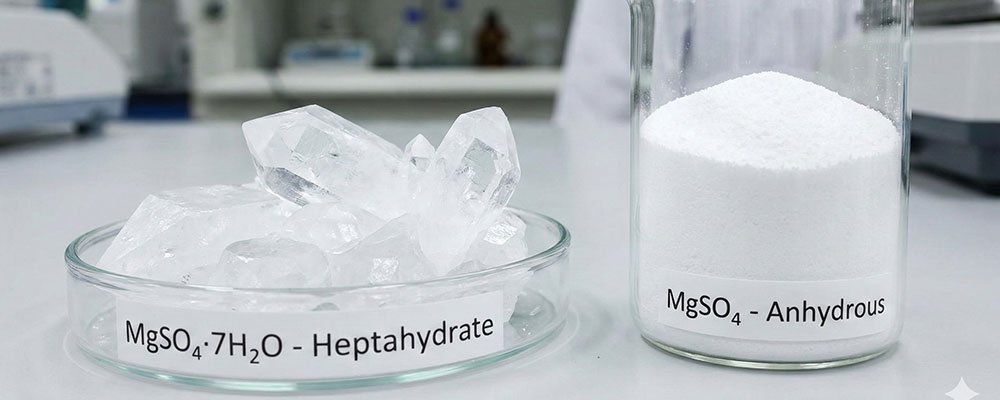
Anhydrous Magnesium Sulfate is a crucial inorganic chemical raw material widely used in pharmaceuticals, chemicals, food, feed, rubber, coatings, and electronics. Its preparation involves various methods, with the Thermal Immersion Method and the Recrystallization Method being the two main industrialized core processes.
I. Thermal Immersion Method (Hot Leaching)
The Thermal Immersion Method is a traditional and highly efficient process for producing anhydrous magnesium sulfate, primarily focused on large-scale industrial continuous production.
Principle: The process achieves the dissolution, crystallization, and dehydration of magnesium sulfate by controlling the solution ratio and temperature.
Process Flow:
- Solution Preparation and Mixing: Magnesium sulfate mother liquor
- Hot Leaching Reaction: The mixture is continuously stirred and leached at hours to ensure full reaction and crystal precipitation.
- Impurity Removal and Purification: Soluble impurities and insolubles are removed via filtration.
- Cooling Crystallization: The cooling rate is controlled to crystallize out magnesium sulfate monohydrate.
- Washing and Drying: The resulting crystals are thoroughly washed, then completely dehydrated at a high temperature to yield Anhydrous Magnesium Sulfate .
Advantage: Simple process, readily available raw materials, low production cost, suitable for large-scale industrial continuous production.
II. Recrystallization Method
The Recrystallization Method emphasizes product purity, making it widely used for preparing high-grade, electronic-grade, or pharmaceutical-grade anhydrous magnesium sulfate.
Process Steps:
- Dissolution and Filtration: Industrial-grade magnesium sulfate raw material is dissolved in an appropriate amount of hot water. The solution is left to stand and then filtered to remove heavy metal impurities such as iron and lead.
- Concentration and Crystallization: The filtrate is evaporated and concentrated, then cooled to precipitate high-purity magnesium sulfate heptahydrate crystals.
- Centrifugal Separation: The solid-liquid phase is separated by centrifugation to enhance purity.
- Dehydration and Drying: The purified heptahydrate undergoes a dehydration reaction at approximately to remove the water of crystallization, yielding the high-purity Anhydrous Magnesium Sulfate finished product.
Advantage: Produces a product with uniform particle size, high whiteness, and low impurity content, making it ideal for electronic grade, pharmaceutical grade, and analytical reagent preparation.
III. Other Advanced Preparation Processes
In addition to the two main processes, modern industry has developed various derivative or optimized routes to improve energy efficiency and environmental performance.
A. Direct Dehydration of Heptahydrate
- Process: Magnesium sulfate heptahydrate is directly subjected to a staged temperature increase to sequentially generate monohydrate and finally anhydrous magnesium sulfate .
- Suitability: This method uses simpler equipment and lower energy consumption, suitable for small to medium-sized enterprises.
B. Comprehensive Utilization of Byproducts
- Process: Magnesium-containing waste materials like borax sludge, salt lake brine, or magnesium slag are utilized. The magnesium ions are extracted and converted into magnesium sulfate products through acidolysis, extraction, and crystallization processes.
- Value: This method aligns with green chemistry trends, offering significant economic and environmental value through waste resource utilization.
C. Modern Equipment Optimization
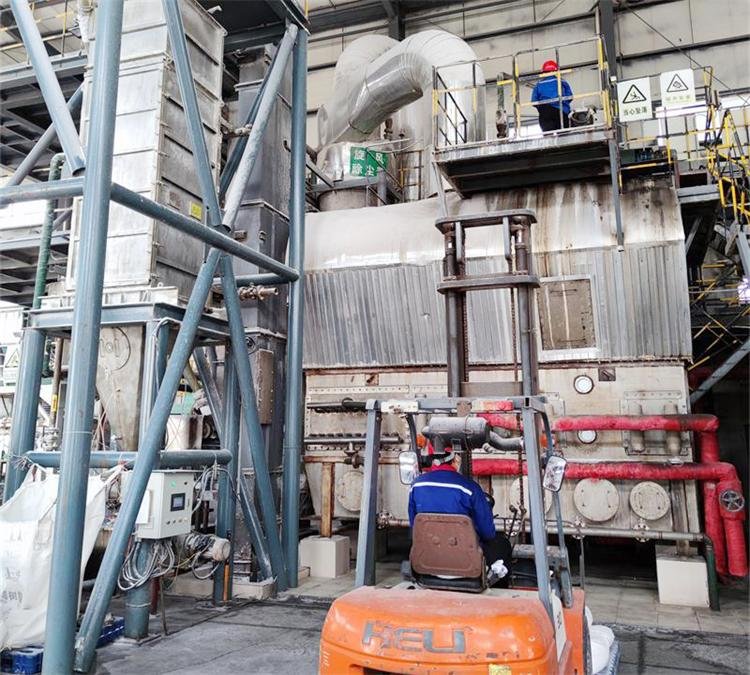
- Equipment: Production lines now commonly feature rotary dryers, fluidized bed dryers, vacuum dehydrators, and high-precision grinding equipment.
- Function: These machines are used to enhance product particle size uniformity, purity, and production efficiency. Automated control systems (PLC/SCADA) are often employed for precise temperature and humidity regulation, ensuring higher product stability.
IV. Summary
The manufacturing of anhydrous magnesium sulfate has evolved from simple heating dehydration to a diversified, energy-efficient, and intelligent direction.
- The Thermal Immersion Method is best for large-scale production.
- The Recrystallization Method is preferred for high-purity products.
- The Resource Comprehensive Utilization approach represents a future trend in green sustainability.
Through continuous process optimization and equipment upgrades, modern anhydrous magnesium sulfate exhibits superior performance, lower impurities, and a broader application scope, making it an increasingly important basic chemical raw material across numerous industries.