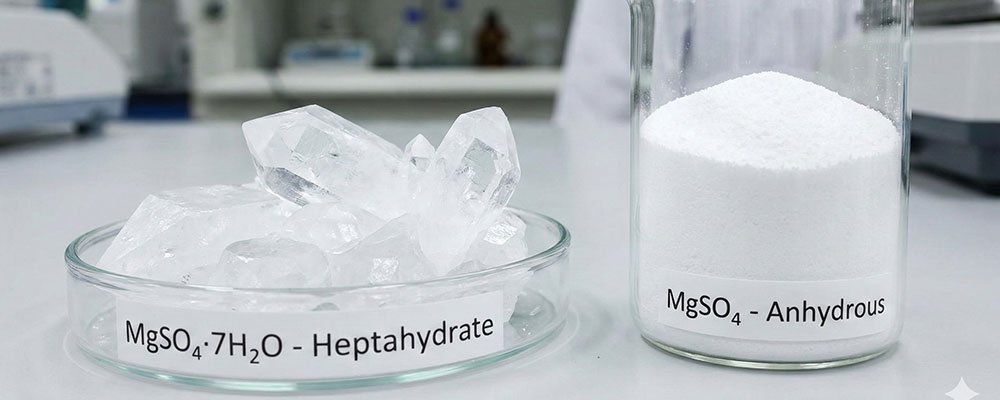
Magnesium Sulfate Heptahydrate in Aquaculture (MgSO₄·7H₂O), commonly known as Epsom Salt, is an essential water quality conditioner and mineral supplement. It plays a critical role in regulating water hardness, stabilizing pH, and enhancing the physiological metabolism of aquatic species. Proper application effectively prevents magnesium deficiency, molting failures, and stress-related weaknesses in farmed animals.
I. Determining Dosage Based on Farmed Species
Magnesium requirements vary significantly between species. Using Magnesium Sulfate Heptahydrate in Aquaculture should be tailored to metabolic needs:
Shrimp Farming (High Demand):
Shrimp have a higher demand for magnesium, especially those with frequent molting cycles.
- Pacific White Shrimp: Apply 5–7kg per mu (at 1m water depth).
- Giant River Prawn: Apply 6–8kg per mu due to faster metabolism.
Impact Note: Insufficient magnesium can lead to difficult molting anNote: Insufficient Mg leads to difficult molting; excess can disrupt osmotic regulation.d increased stress response, while excessive amounts may cause ion imbalance and affect osmotic regulation.
Fish Farming:
Fish have a relatively lower magnesium requirement.
- General Dosage: 2–3kg per mu is typically sufficient.
Caution: Over-application may negatively affect the fish gills’ ion exchange and respiratory function; concentration must be carefully controlled.
II. Dynamic Adjustment for Water Quality
Dosage should be adjusted based on your existing water environment:
| Water Quality Condition | Dosage Recommendation (kg/mu) | Rationale/Adjustment |
| Hard Water Area | 2–3kg/mu | Natural Mg content is already high; supplement with Ca and K to maintain ion balance. |
| Soft Water Area | 4–5kg/mu | Lower natural Mg content; increase dosage to stabilize water hardness. |
| Rainy Season (Hard Water Area) | Reduce from approx. 3kg to approx. 2kg | Prevent excessively low salinity/ionic strength. |
| Dry Season | Appropriately increase to approx. 3.5kg/mu | Help suppress excessive algae proliferation. |
pH Note:
- In alkaline water (pH > 8.5), magnesium ions may precipitate. Adjust pH to neutral before applying Magnesium Sulfate Heptahydrate in Aquaculture.
III. Application Scenarios and Strategy
1.Routine Maintenance
- Application: When water hardness is insufficient or algal activity is declining.
- Dosage: Apply approximately 4 Jin (approx. 2kg) of MgSO4 · 7H2O per mu.
- Synergy: Can be used in combination with monocalcium phosphate (Ca(H2PO4)2). This combination enhances water buffering capacity, promotes photosynthesis, and boosts plankton reproduction.
2. Freshwater Shrimp Management
- Scenario: Shrimp farming using groundwater, where Mg levels are often low.
- Dosage: Broadcast 500g of MgSO4 · 7H2O per mu.
- Frequency: Supplement every 7–10 days. Increase frequency during intensive molting periods to maintain stable ionic balance and water hardness.
3. Synergistic Pairing and Incompatible Mixtures
| Pairing | Rationale |
| Shrimp: Mix MgSO₄·7H₂O with Calcium Chloride (CaCl₂) at a 1:1 ratio for carapace hardening. | Replenishes both magnesium and calcium ions, essential for carapace hardening. |
| Fish: Mix with Potassium Sulfate (K₂SO₄) for improved fish osmotic regulation. | Supplies potassium, improving osmotic regulation function. |
⚠️ Incompatibility Warning:
CRITICAL WARNING: DO NOT directly mix Magnesium Sulfate Heptahydrate with Calcium Chloride or Sodium Bicarbonate in concentrated form. This causes immediate precipitation. Improper mixing has caused large-scale suffocation in shrimp fry. Always apply separately or pre-dilute.
IV. Conclusion
The scientific application of MgSO4 · 7H2O effectively:
- Regulates water hardness and ionic balance.
- Enhances the metabolism and stress resistance of farmed animals.
- Improves the stability of the aquaculture environment.
Scientific use of Magnesium Sulfate Heptahydrate in Aquaculture is a cornerstone of high-yield farming. By regulating ionic balance and enhancing animal metabolism, it ensures a stable and healthy aquatic ecosystem. Always adjust your dosage based on seasonal changes and species-specific needs.
Frequently Asked Questions (FAQ)
1. Why is Magnesium Sulfate Heptahydrate important for shrimp farming?
Shrimp require significant amounts of magnesium for their molting process. Magnesium Sulfate Heptahydrate in Aquaculture provides the necessary Mg ions to help shrimp successfully shed their old shells and harden new ones. Without enough magnesium, shrimp may suffer from “soft shell” syndrome or molting failure, leading to high mortality rates.
2. Can I use Magnesium Sulfate Heptahydrate to stabilize water pH?
Yes. While it is primarily a mineral supplement, it helps regulate the ionic balance and buffering capacity of the water. When used correctly, it helps prevent drastic pH swings, creating a more stable environment for both aquatic animals and beneficial plankton.
3. What happens if I overdose Magnesium Sulfate in my pond?
Overdosing can lead to an ionic imbalance, specifically affecting the osmotic pressure regulation in fish and shrimp. In fish, excessive magnesium can interfere with gill function and respiration. It is crucial to follow the recommended dosage of 2–3kg/mu for fish or 5–7kg/mu for shrimp based on 1-meter water depth.
4. Why is it dangerous to mix Magnesium Sulfate with Calcium Chloride directly?
Mixing them directly in a concentrated form causes a chemical reaction that results in precipitation (forming insoluble solids). This not only wastes the fertilizer but can also clog irrigation systems or, in extreme cases, cause physical harm to shrimp fry, such as suffocation. Always apply them separately or ensure they are fully diluted in a large volume of water.
5. How often should I apply Magnesium Sulfate Heptahydrate in freshwater ponds?
For routine maintenance, especially in groundwater-based systems with low mineral content, it is recommended to supplement every 7 to 10 days. During peak molting seasons for shrimp, the frequency may need to be increased to maintain stable magnesium levels.
6. Does the dosage change during the rainy season?
Yes. Heavy rain can dilute the mineral concentration in your pond. However, in hard water areas, you might actually need to reduce the dosage slightly to prevent a sudden spike in ionic strength when the water level stabilizes. Always test your water hardness after heavy rainfall before adding supplements.