Magnesium Sulfate in Dyeing Wastewater Treatment has emerged as a cornerstone of efficient and cost-effective decolorization. As the textile industry evolves, wastewater becomes more complex with highly stable dye structures. Magnesium Sulfate (MgSO₄), often used alongside Ferrous Sulfate (FeSO₄), provides a powerful chemical coagulation solution to meet stringent environmental standards.
I. Challenges in Textile Dyeing Wastewater Treatment
The stability and vibrancy of modern textiles result in wastewater containing complex, stable dye structures. Traditional physical adsorption often fails to remove these organic pollutants. Consequently, developing efficient decolorization processes using Magnesium Sulfate in Dyeing Wastewater Treatment has become a top priority for the industry.
II. Synergistic Decolorization Mechanism
Using a combination of Magnesium Sulfate and Ferrous Sulfate leverages a dual mechanism of chemical reduction and physical adsorption.
1. Reductive Action of Ferrous Sulfate (FeSO₄)
Ferrous sulfate initiates a reduction reaction that destroys chromophoric groups (like azo and quinone), turning them into colorless intermediates.
-
Color removal: Up to 95%.
-
Sulfide removal: Approx. 96%.
-
BOD removal: Approx. 59%.
2. Adsorption Power of Magnesium Sulfate (MgSO₄)
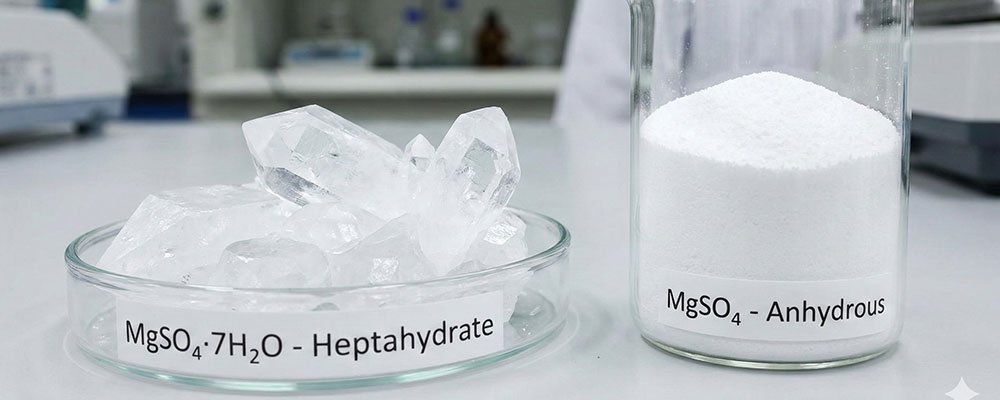
In solution, Magnesium Sulfate in Dyeing Wastewater Treatment hydrolyzes to form Magnesium Hydroxide [Mg(OH)₂]. This substance has a massive surface area for adsorbing hydrophilic groups in dye molecules.
-
Decolorization rate: Exceeds 98%.
-
CODcr removal: Reaches 70% or more.
-
Sludge Advantage: Mg(OH)₂ flocs are dense and settle rapidly, significantly reducing sludge dewatering costs.
III. Treatment Efficiency Comparison Table
- Ferrous Sulfate: Primarily used for the rapid destruction of the dye’s chromophore structure, achieving initial decolorization.
- Magnesium Sulfate: Generates Mg(OH)2 to further adsorb residual dyes and soluble organic matter, enhancing the overall removal efficiency.
This reduction + adsorption composite process simultaneously lowers color intensity, CODcr, and BOD, substantially improving the comprehensive effect of wastewater treatment.
Optimization: The treatment efficiency can be further boosted by combining them with inorganic polymer flocculants (such as Polyaluminum Chloride or Polyferric Sulfate), which improves settling velocity and the clarity of the effluent.
IV. Optimization Strategies
For maximum efficiency, combine Magnesium Sulfate in Dyeing Wastewater Treatment with inorganic polymer flocculants like Polyaluminum Chloride (PAC). This combination improves the settling velocity and ensures the effluent transparency meets international discharge standards.
- Dye color removal rate of over 95%.
- CODcr removal rate of 65%–75%.
- Significantly improved effluent transparency.
- Low sludge production, potentially reducing treatment costs by over 30%.
This method is not only economical and reliable but also facilitates the simultaneous removal of heavy metal ions and certain organic pollutants from the wastewater, providing a comprehensive solution for the textile dyeing industry that is highly efficient, environmentally sound, and cost-effective.
V. Conclusion
The application of Magnesium Sulfate and Ferrous Sulfate underscores the value of inorganic coagulation in modern environmental protection. By precisely controlling reaction conditions, factories can achieve high decolorization rates while maintaining sustainable and cost-effective operations.
FAQ: Decolorization with Magnesium Sulfate
Q: Why use Magnesium Sulfate instead of traditional lime for decolorization?
A: Magnesium Sulfate forms Magnesium Hydroxide flocs that are more effective at adsorbing dissolved dyes and produce less sludge volume compared to lime-based treatments.
Q: Is Magnesium Sulfate effective for all types of dyes?
A: It is particularly effective for reactive dyes and acid dyes with hydrophilic groups (like sulfo groups), achieving over 98% decolorization.
Q: Does it affect the pH of the treated water?
A: MgSO₄ is a neutral salt, but its effectiveness is highest in alkaline conditions where Mg(OH)₂ can precipitate. pH adjustment is usually part of the optimization process.