
Master your clear liquid fertilizer formulation. Discover expert R&D tips on MgSO4 solubility in cold water and preventing crystallization in magnesium sulfate liquid fertilizer.
Product Overview
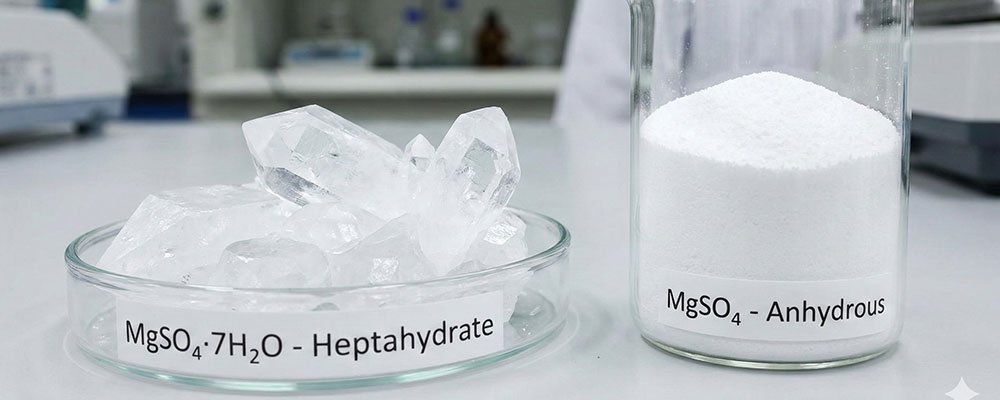
For agricultural R&D engineers and formulators, developing a highly concentrated, stable magnesium sulfate liquid fertilizer presents unique physical chemistry challenges. Magnesium (the central atom of the chlorophyll molecule) and Sulfur are essential macronutrients, making Magnesium Sulfate Heptahydrate (MgSO4·7H2O) a staple in fluid fertilizer production.
However, formulating a clear liquid fertilizer formulation that remains stable during winter storage and transport requires a deep understanding of saturation points and water chemistry. At WoheChemical, we engineer ultra-pure, 100% water-soluble MgSO4·7H2O specifically for downstream liquid blending, ensuring your final product remains crystal clear, highly concentrated, and completely free of insoluble grit.
(Set Alt Text to: R&D laboratory testing a clear liquid fertilizer formulation using high-purity magnesium sulfate)
Application Scenarios
High-purity liquid formulations are increasingly preferred over dry blends in modern precision agriculture due to their ease of handling and uniform nutrient distribution:
- Ready-to-Use Foliar Sprays: Requires absolute clarity to ensure rapid leaf absorption without leaving phytotoxic residues or clogging micro-nozzles.
- Commercial Hydroponic Stock Solutions: Concentrated liquid A/B tank systems for greenhouses demand zero precipitation to maintain precise Electrical Conductivity (EC) levels.
- Bulk Liquid Nutrient Distribution: Manufacturing high-density liquid fertilizers that are pumped into IBC totes for regional farming co-ops.
Product Advantages
When formulators source their raw materials from WoheChemical, they bypass the most common liquid manufacturing headaches:
- Zero Insoluble Impurities: Standard agricultural grades contain silica and heavy metals that create a cloudy suspension. Our premium grade dissolves into a perfectly transparent solution.
- Predictable Dissolution Rates: Our uniform crystal sizing ensures consistent batch-to-batch dissolving times in your mixing reactors.
- Unmatched Stability: By strictly controlling trace transition metals in our raw material, we help you in preventing crystallization and unwanted chemical reactions with other chelated micronutrients in your blend.
Usage Guide / Precautions
Mastering MgSO4 Solubility in Cold Water
The most critical factor in a magnesium sulfate liquid fertilizer is temperature. While MgSO4·7H2O is highly soluble, its solubility curve is temperature-dependent.
It is also important to note that dissolving MgSO4·7H2O is an endothermic reaction—it absorbs heat from the water. If you dump a large batch of crystals into a mixing tank, the water temperature will drop, temporarily reducing the maximum solubility and slowing down the process.
(Set Alt Text to: Graph showing MgSO4 solubility in cold water and preventing crystallization)
Formulator’s Solubility Reference
| Water Temperature | Max Solubility (g of MgSO4·7H2O per 100ml water) | Formulation Risk Level |
| 0°C (32°F) | ~71.0 g | High risk of “salting out” (crystallization) |
| 10°C (50°F) | ~80.5 g | Moderate. Requires extended agitation. |
| 20°C (68°F) | ~91.0 g | Optimal baseline for clear liquid fertilizer formulation |
| 30°C (86°F) | ~104.0 g | Excellent. Fast dissolution. |
Note: For detailed thermodynamic properties and solubility data of inorganic salts, chemical engineers often reference the CRC Handbook of Chemistry and Physics. (Rank Math SEO: Authoritative External Link)
Water Quality: Hard vs. Soft Water
The solvent matters just as much as the solute.
- Soft Water / RO Water: Reverse Osmosis water is the gold standard. It allows for maximum saturation and guarantees a clear solution.
- Hard Water: If your mixing facility uses hard well water (high in calcium and magnesium carbonates), adding high concentrations of sulfate can trigger a reaction that forms calcium sulfate (gypsum). This results in a milky, cloudy liquid and sediment at the bottom of the IBC tote.
Preventing Crystallization (Salting Out)
To achieve a stable shelf life, never formulate right at the absolute saturation point for room temperature. If the IBC tote is shipped to a colder climate, the temperature drop will force the solution into a supersaturated state, causing massive crystal growth at the bottom of the tank. Always formulate with a 10% to 15% safety margin below the maximum solubility limit of the lowest expected storage temperature.
FAQ
Q1: What is the correct mixing order for a clear liquid fertilizer formulation?
A1: Always fill your reactor tank with the required water first, start the agitator, and then slowly add the MgSO4·7H2O. Never add water to a dry mound of chemical, as it can cause clumping and drastically increase dissolving time.
Q2: Why does my liquid magnesium sulfate drop in temperature when mixing?
A2: Dissolving the heptahydrate form is an endothermic process. For large industrial batches, formulators often use pre-heated water (30°C – 40°C) to offset this temperature drop and maintain a high MgSO4 solubility in cold water environments.
Q3: Can I mix this liquid magnesium sulfate with liquid calcium nitrate?
A3: No. Just as with dry mixing, combining concentrated liquid magnesium sulfate with liquid calcium nitrate will immediately result in irreversible calcium sulfate precipitation. They must be kept in separate formulations.