Master magnesium sulfate heptahydrate moisture content. Learn the difference between free water and water of crystallization MgSO4 to prevent chemical weight loss.
Product Overview
One of the most common and frustrating disputes in the global chemical trade revolves around unexpected cargo weight discrepancies upon arrival. A procurement manager might receive a shipping container in the Middle East only to find the bags feel “wet” or weigh less than the billed amount.
Understanding the true nature of magnesium sulfate heptahydrate moisture content is the key to preventing these costly misunderstandings. The confusion almost always stems from misunderstanding the difference between “Free Water” and the chemically bound water of crystallization MgSO4. At WoheChemical, we employ precise thermodynamic drying processes to guarantee that you pay for pure chemical structure, not excess surface water.
(Set Alt Text to: Molecular structure demonstrating the water of crystallization MgSO4 heptahydrate)
Application Scenarios
Understanding thermal stability and moisture content is critical for buyers who subject their materials to heat:
- Middle East / Africa Logistics: Containers sitting in summer port yards can easily exceed 50°C inside, triggering phase changes in the shipped chemicals.
- Industrial Drying & Calcining: Factories buying heptahydrate to produce anhydrous magnesium sulfate must calculate exactly how much energy is required for drying magnesium sulfate.
- Dry Powder Formulations: Feed premix and fertilizer blenders need completely dry-to-the-touch crystals to prevent their automated hoppers from gumming up.
Product Advantages
WoheChemical’s advanced centrifugation and fluidized bed drying technology offers a distinct advantage:
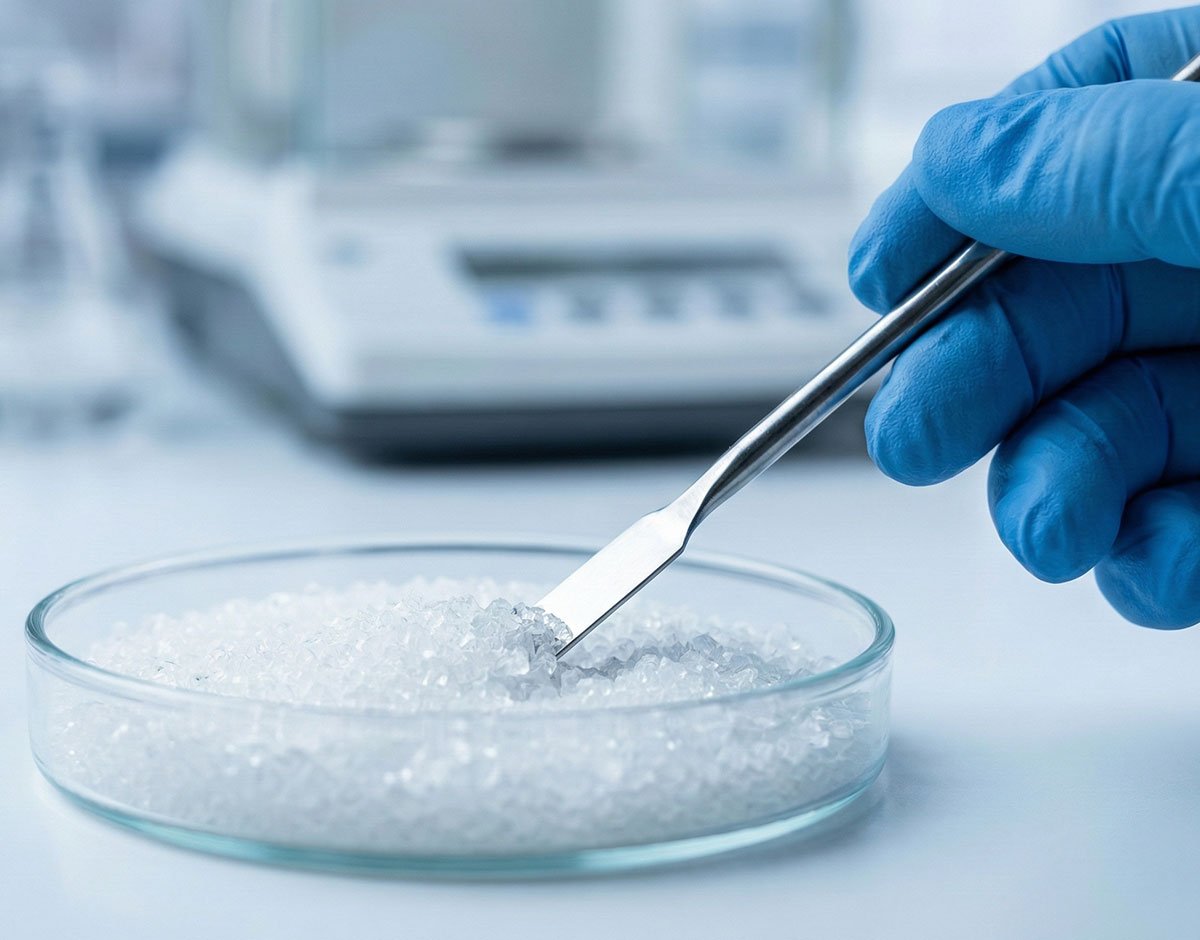
- Zero Free Moisture: Our MgSO4·7H2O looks and feels like dry, free-flowing sugar. We meticulously strip away the unbonded surface water during production so you are not paying freight costs to ship plain water.
- Stable Crystal Lattice: We strictly maintain the 7 molecules of bound water (heptahydrate) intact, ensuring the product retains its guaranteed 9.8% Magnesium content.
- Accurate COA Reporting: Our Quality Control laboratory uses precise loss-on-drying (LOD) testing methods, providing you with a fully transparent and accurate moisture analysis before the cargo leaves our port.
Usage Guide / Precautions
The Science: Free Water vs. Water of Crystallization
To avoid panic over chemical weight loss, buyers must understand these two distinct types of water:
- Free Water (Surface Moisture): This is water sitting on the outside of the crystal. If a factory has poor drying equipment, the product will feel damp and clump together easily.
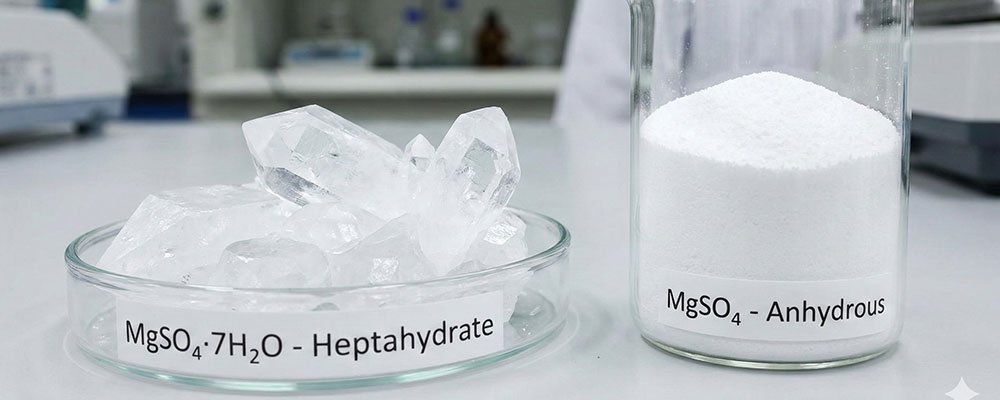
- Water of Crystallization: This is water chemically trapped inside the molecular lattice of the crystal. Magnesium Sulfate Heptahydrate (MgSO4·7H2O) contains exactly 7 molecules of water. Because of this, the seemingly “dry” crystal is actually about 51.1% water by weight.
The Physics of Chemical Weight Loss in High Heat
The heptahydrate crystal is perfectly stable at standard room temperatures. However, if you are storing the product in extreme climates or processing it in a hot facility, you must be aware of its thermal degradation curve:
| Temperature Exposure | What Happens to MgSO4·7H2O? | Impact on Product & Weight |
| Below 48°C (118°F) | Completely stable. | Remains a dry, free-flowing crystal. |
| 48°C – 50°C | Reaches its “melting point” in its own water. | The crystal lattice breaks. The powder turns into a wet, slushy paste. |
| 150°C (300°F) | Loses 6 molecules of water. | Becomes MgSO4·H2O (Monohydrate). Experiences ~43% chemical weight loss. |
| 200°C+ (392°F+) | Loses the final molecule of water. | Becomes fully Anhydrous MgSO4. Total weight loss of ~51%. |
(Set Alt Text to: Graph showing thermal decomposition and drying magnesium sulfate chemical weight loss)
For deeper verification of thermal decomposition properties and molecular weights, chemists rely on databases like the National Center for Biotechnology Information (PubChem). (Rank Math SEO: Authoritative External Link)
Preventing Transit “Melting”
If a shipping container crossing the equator sits under direct sun, the internal temperature can easily surpass 50°C. The water of crystallization MgSO4 will begin to release, making the bags look like they suffered water damage, even if the container is perfectly watertight. To prevent this, WoheChemical recommends:
- Stowing containers below deck away from boiler rooms during ocean transit.
- Rapidly clearing customs to avoid leaving containers in sun-baked port yards.
- Storing the cargo in shaded, well-ventilated warehouses immediately upon arrival.
FAQ
Q1: My bags of MgSO4·7H2O arrived weighing 24.5kg instead of 25kg, but there are no holes in the bag. Was I cheated?
A1: It is highly unlikely you were cheated. If the cargo was subjected to intense heat during transit, a small amount of the water of crystallization may have evaporated and escaped as gas if the PE liner was not 100% hermetically sealed. The actual Magnesium (Mg) content remains exactly the same; you only lost water weight.
Q2: Why does WoheChemical’s product feel completely dry if it is 51% water?
A2: Because that 51% is chemically bound water of crystallization MgSO4, locked inside the solid crystal structure. We remove 100% of the “free water” on the surface using specialized centrifugal dryers, which is why our product never feels damp.
Q3: Can I use high heat to dry out damp magnesium sulfate?
A3: If you are simply trying to remove surface moisture to prevent caking, keep the drying temperature well below 45°C. Exceeding 48°C will cause the crystals to dissolve in their own bound water, ruining the physical structure of your batch.