
Sourcing MENA region agriculture chemicals? Discover how magnesium fertilizer in arid climates acts as a powerful saline soil amendment for resilient crops.
Product Overview
Agricultural production in the Middle East and North Africa (MENA) faces two relentless enemies: severe water scarcity and high soil salinity. In these extreme environments, crops are under constant physiological stress, making the precise management of plant nutrition a matter of survival.
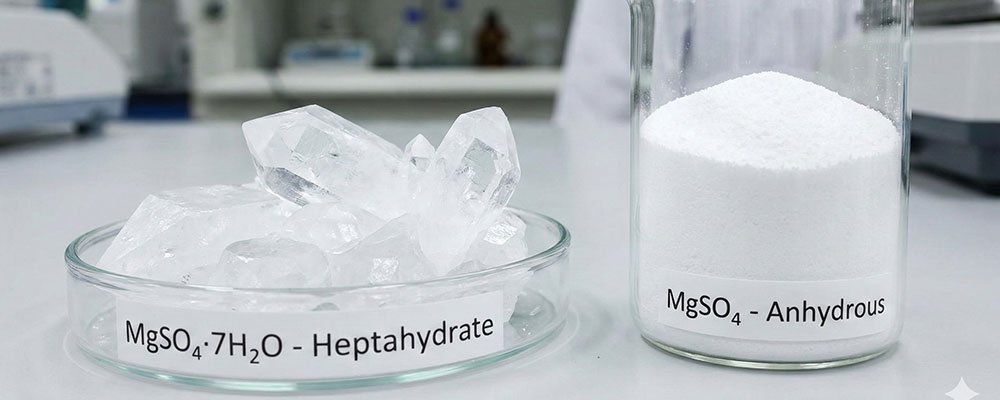
Applying magnesium fertilizer in arid climates is no longer just about preventing nutrient deficiencies; it is a critical strategy for building crop resilience against drought and salt toxicity. At WoheChemical, we supply premium, 100% water-soluble Magnesium Sulfate (MgSO4·7H2O and anhydrous) to the MENA region. Our pure, chloride-free products serve as an essential saline soil amendment, empowering large-scale farms to maximize their yields in the world’s most challenging agricultural zones.
Application Scenarios
Our magnesium sulfate is the backbone of high-value crop production across desert regions:
- Date Palm Plantations: Date palms are incredibly resilient but require massive amounts of magnesium to maintain their lush, green fronds and support high fruit yields under extreme heat and intense solar radiation.
- Desert Greenhouse Fertigation: High-tech hydroponic and drip-irrigated greenhouses in the UAE and Saudi Arabia rely on our 100% soluble MgSO4 to precisely manage the electrical conductivity (EC) of their nutrient solutions without clogging micro-emitters.
- Olive & Citrus Groves: Helps mitigate the “leaf burn” caused by high sodium and chloride levels typical of ground-water irrigation in arid zones.
Product Advantages
Why do top agricultural procurement managers source their MENA region agriculture chemicals from WoheChemical?
- Zero Chloride Formulation: In arid regions, adding more chlorides to the soil is agricultural suicide. Unlike Magnesium Chloride (MgCl2), our Magnesium Sulfate (MgSO4) provides essential nutrients without adding to the toxic salt burden of the soil.
- Drought Stress Mitigation: Magnesium plays a direct role in regulating the stomata (the pores on plant leaves). Optimal magnesium levels help plants close their stomata faster during the peak heat of the day, drastically reducing water loss through transpiration.
- Highly Soluble for Scarce Water: In regions where every drop of water counts, you cannot afford fertilizers that do not dissolve. Our heptahydrate crystals dissolve rapidly and completely, ensuring 100% nutrient delivery through your drip lines.
Combatting Salt Stress: How It Works
| Plant Stress Factor | The Arid Climate Challenge | The Magnesium Sulfate Solution |
| Sodium Toxicity | High soil sodium (Na+) competes with nutrients. | Mg2+ ions compete with Na+ at the root zone, reducing toxic sodium uptake. |
| Water Scarcity | Plants dehydrate rapidly under the desert sun. | Improves root growth and stomatal regulation to retain cellular water. |
| Photosynthesis Drop | Heat stress destroys chlorophyll molecules. | Provides the central building block to continuously regenerate chlorophyll. |
| High Soil pH | Calcareous desert soils lock up trace minerals. | Sulfate (SO4) provides a mild acidifying effect in the localized root zone. |
For advanced research on managing salinity and water scarcity, we highly recommend the guidelines published by the International Center for Biosaline Agriculture (ICBA). (Rank Math SEO: Authoritative External Link)
Usage Guide / Precautions
Applying Saline Soil Amendment Strategies
When utilizing magnesium fertilizer in arid climates, traditional broadacre broadcasting is highly inefficient. Because desert soils are typically very sandy, they have a low Cation Exchange Capacity (CEC), meaning nutrients wash away quickly if over-irrigated.
- Spoon-Feeding via Fertigation: The most effective method is “spoon-feeding”—injecting small, highly concentrated doses of dissolved MgSO4·7H2O directly into the drip irrigation system (fertigation) on a weekly basis.
- Foliar Rescue Sprays: If date palms or citrus trees show sudden signs of salt stress (yellowing between the leaf veins), a foliar spray of magnesium sulfate bypasses the hostile, salty soil entirely and delivers immediate relief directly through the leaves.
Storage Precautions in the Middle East
The MENA region experiences blistering daytime heat and high humidity near coastal areas (like the Persian Gulf or Red Sea). To prevent our product from caking or losing its water of crystallization in 50°C warehouse conditions, always store the 25kg or FIBC Jumbo bags on pallets in shaded, well-ventilated, or climate-controlled facilities. Do not stack pallets more than one tier high to avoid pressure caking.
FAQ
Q1: Can using magnesium fertilizer in arid climates actually reduce the salt in my soil?
A1: Magnesium sulfate does not “remove” salt from the soil. Instead, it acts as a physiological shield. By saturating the root zone with healthy Magnesium (Mg2+) and Calcium (Ca2+) ions, you prevent the plant roots from absorbing the toxic Sodium (Na+) ions present in the saline water.
Q2: Is magnesium sulfate safe for chloride-sensitive desert crops?
A2: Yes, absolutely. It is the premier choice because it contains zero chlorides. It provides Magnesium and Sulfur (both essential macronutrients) without contributing to the chloride toxicity that plagues many desert farms.
Q3: Does WoheChemical have experience shipping bulk MENA region agriculture chemicals?
A3: Yes. We regularly export massive volumes of agricultural-grade magnesium sulfate to ports in the UAE, Saudi Arabia, Egypt, and Morocco. We optimize our packaging with thick inner PE liners specifically to survive the extreme maritime and desert transit conditions.