Product Overview: Core Components & Classification
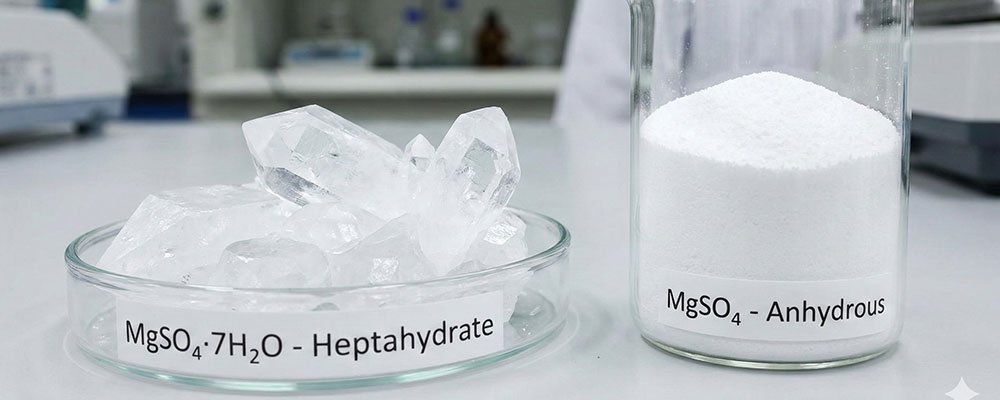
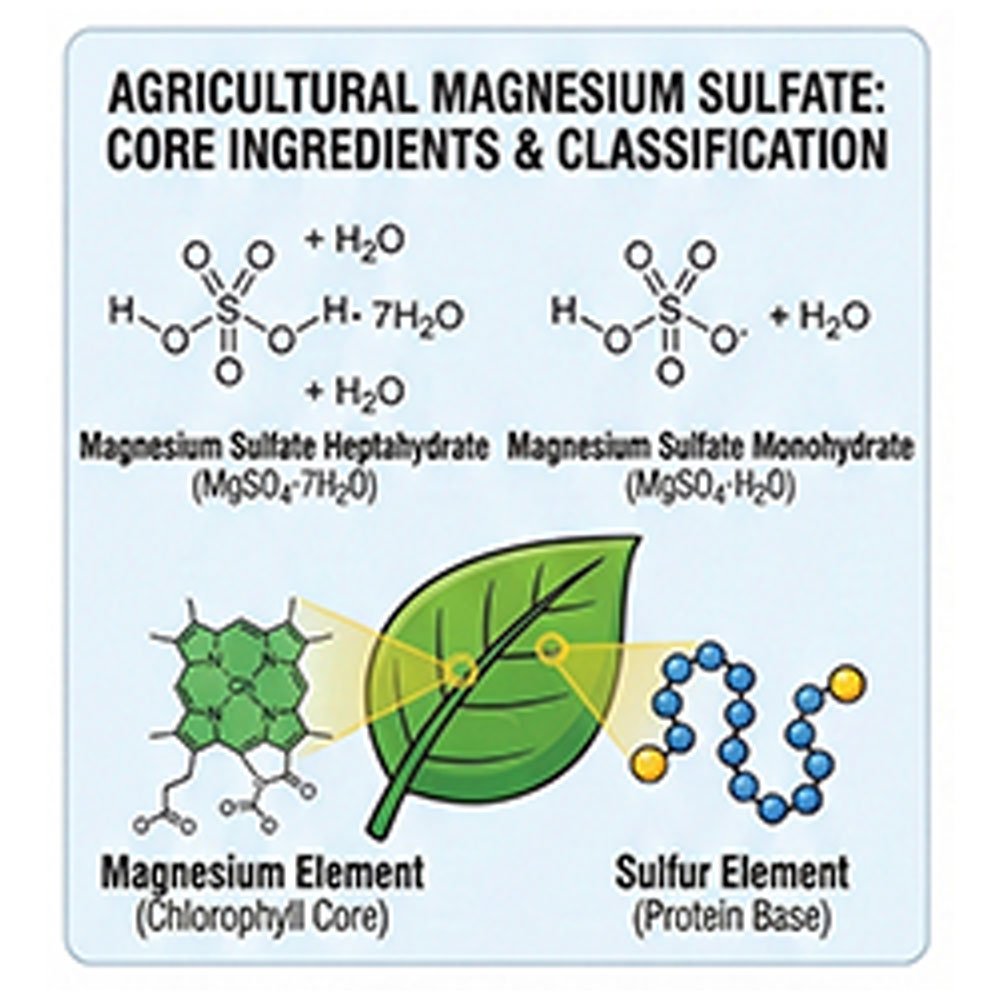
Agricultural Magnesium Sulfate is a vital secondary nutrient fertilizer that primarily comes in two chemical forms: Magnesium Sulfate Monohydrate (MgSO₄·H₂O) and Magnesium Sulfate Heptahydrate (MgSO₄·7H₂O).
Understanding its chemical composition is key to maximizing its benefits:
- Magnesium Element: Acts as the core of chlorophyll, essential for photosynthesis.
- Sulfur Element: Serves as the cornerstone of proteins, vital for amino acid synthesis.
Physiological Functions
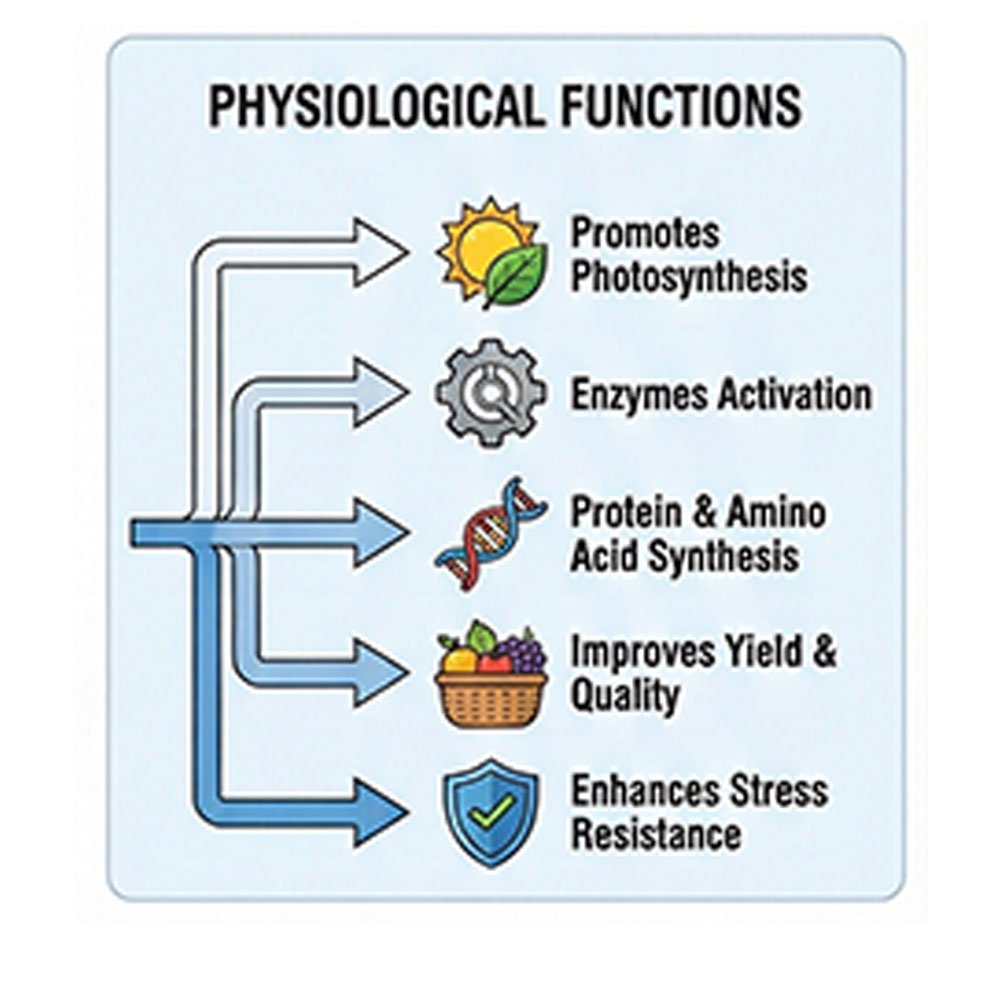
The application of Magnesium Sulfate triggers several critical physiological processes in plants:
- Photosynthesis Promotion: By supplying magnesium, it directly boosts the plant’s ability to process sunlight.
- Enzyme Activation: It participates in the activation of various plant enzymes necessary for growth.
- Synthesis Support: It facilitates the synthesis of proteins and amino acids.
- Overall Improvement: These functions combined lead to increased crop yield, better quality, and enhanced stress resistance in plants.
Application Scenarios: Soils and Crops
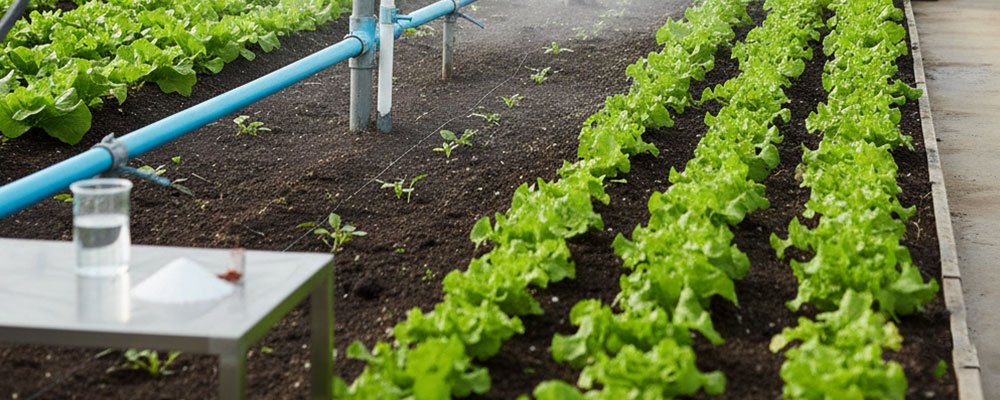
Agricultural Magnesium Sulfate is versatile, but it performs best under specific conditions.
Target Soil Types:
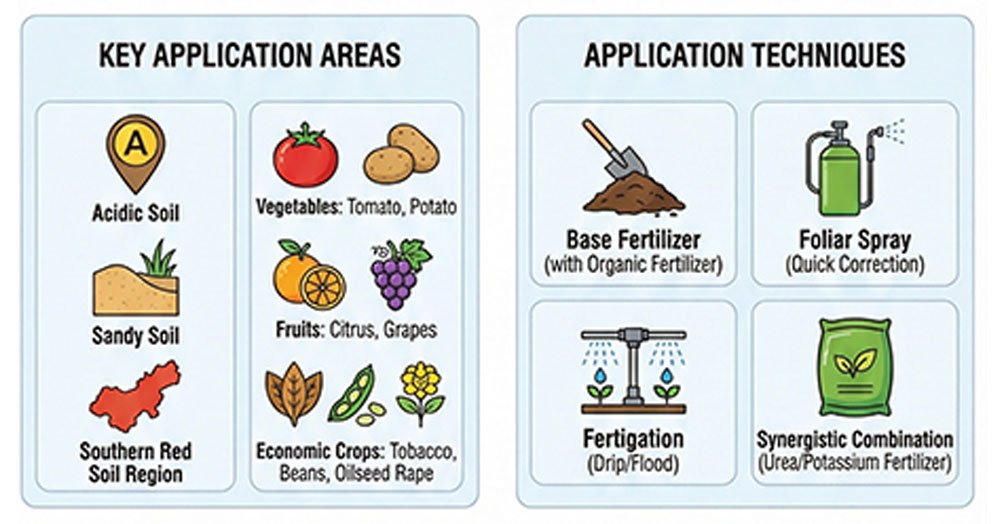
- Magnesium-deficient acidic soils.
- Sandy soils (which often leach nutrients).
- Southern red soil regions.
Target Crops:
- Vegetables: Tomatoes, Potatoes.
- Fruit Trees: Citrus, Grapes.
- Economic Crops: Tobacco, Beans, and Rapeseed (Canola).
Advantages in Agricultural Application
Why choose Magnesium Sulfate over other fertilizers?
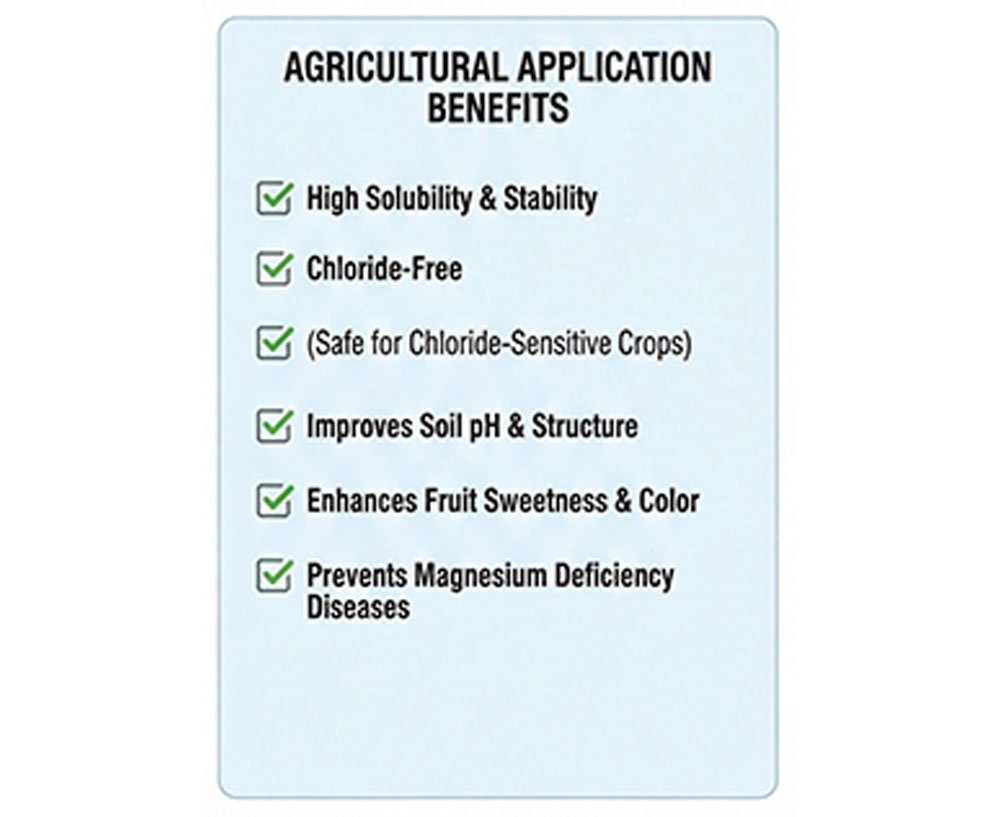
- High Solubility & Stability: It dissolves easily for rapid absorption while remaining chemically stable.
- Chlorine-Free Safety: It contains no chlorine, making it safe for chlorine-sensitive crops like tobacco and grapes.
- Soil Improvement: It helps regulate soil pH values and improves overall soil structure.
- Fruit Quality: It significantly increases fruit sugar content and improves coloring.
- Disease Prevention: It effectively treats deficiency diseases such as “Bronze Disease” in citrus and “Tiger Eye” disease in grapes.
Usage Guidelines: Application Techniques
To achieve optimal results, different application methods should be used based on crop needs:
- Base Fertilizer: Mix with organic fertilizers for long-term soil health.
- Foliar Spraying: The fastest method to correct visible deficiency symptoms.
- Water-Fertilizer Integration: Ideal for drip irrigation and flushing systems.
- Synergistic Combination: Can be paired with Urea or Zinc fertilizers to enhance overall nutrient uptake.
Market & Quality Management
When sourcing Agricultural Magnesium Sulfate, buyers must pay attention to quality control to avoid risks.
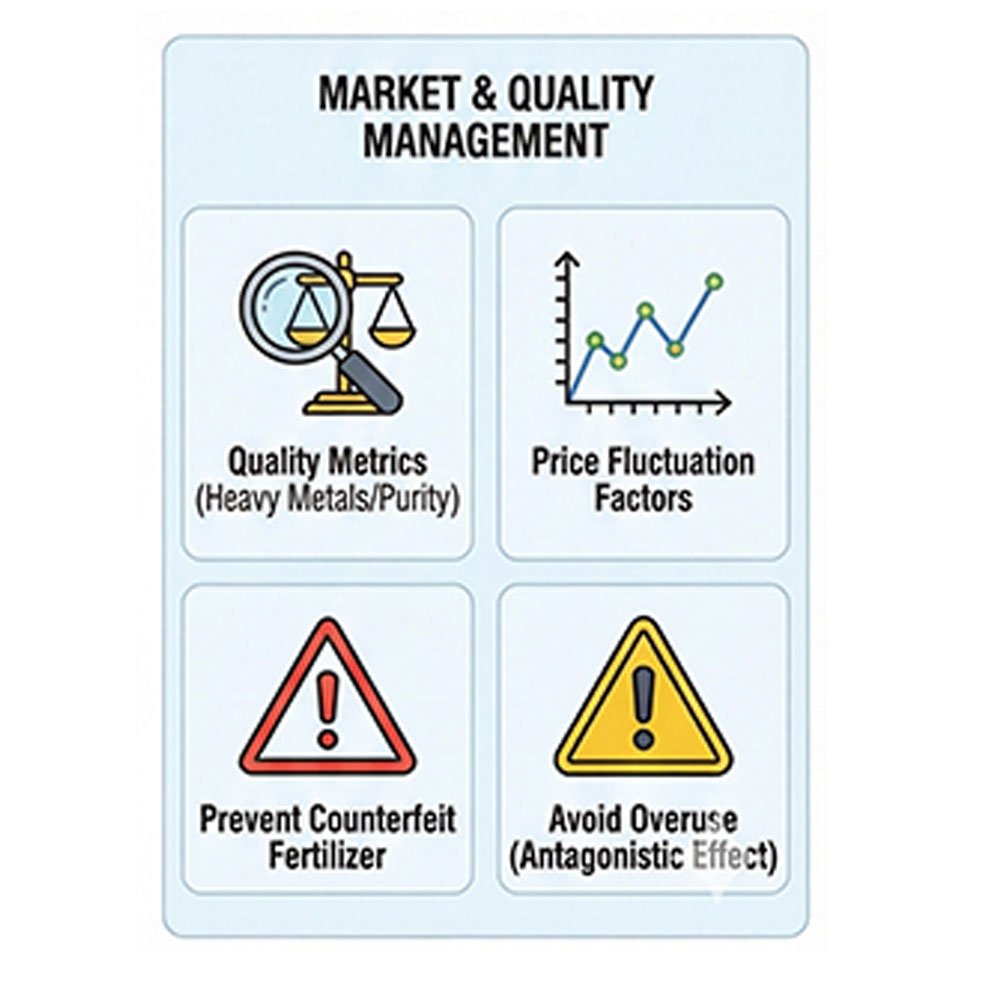
- Quality Indicators: Always verify the purity and heavy metal content.
- Avoid Counterfeits: Be vigilant against low-quality or fake fertilizers in the market.
- Avoid Overuse: Excessive application can lead to antagonism (blocking the absorption of other nutrients), so moderate use is required.
- Price Awareness: Be aware of factors that influence price fluctuations to time your purchases effectively.
Common Questions (FAQ)
Q1: What is the main difference between Monohydrate and Heptahydrate Magnesium Sulfate? A1: They differ mainly in water content and magnesium concentration. Monohydrate (MgSO₄·H₂O) has lower water content, while Heptahydrate (MgSO₄·7H₂O) contains seven water molecules. Both provide essential Magnesium and Sulfur.
Q2: Which specific diseases does Magnesium Sulfate help prevent? A2: It is particularly effective against “Bronze Disease” in citrus fruits and “Tiger Eye” disease in grapes, which are caused by magnesium deficiency.
Q3: Is Magnesium Sulfate safe for all crops? A3: Yes, it is particularly beneficial because it is chlorine-free, making it safe for chlorine-sensitive crops like tobacco, potatoes, and grapes.