Anhydrous Magnesium Sulfate Desiccant (MgSO₄) is a highly effective inorganic salt known for its powerful hygroscopic properties. When exposed to air or moisture, it rapidly absorbs water molecules through a chemical reaction to form Magnesium Sulfate Heptahydrate (MgSO₄·7H₂O).
I. The Chemical Mechanism of Moisture Absorption
The absorption process is a chemical change, not a simple physical adsorption. The MgSO₄ molecular structure forms stable hydrate bonds with water molecules.
The chemical reaction is represented as: MgSO₄ + 7H₂O → MgSO₄·7H₂O
This reorganization of the crystal structure transforms the initial anhydrous powder into a hydrated crystalline product, demonstrating a superior chemical desiccant mechanism compared to physical absorbers.
II. Physical State Transformation
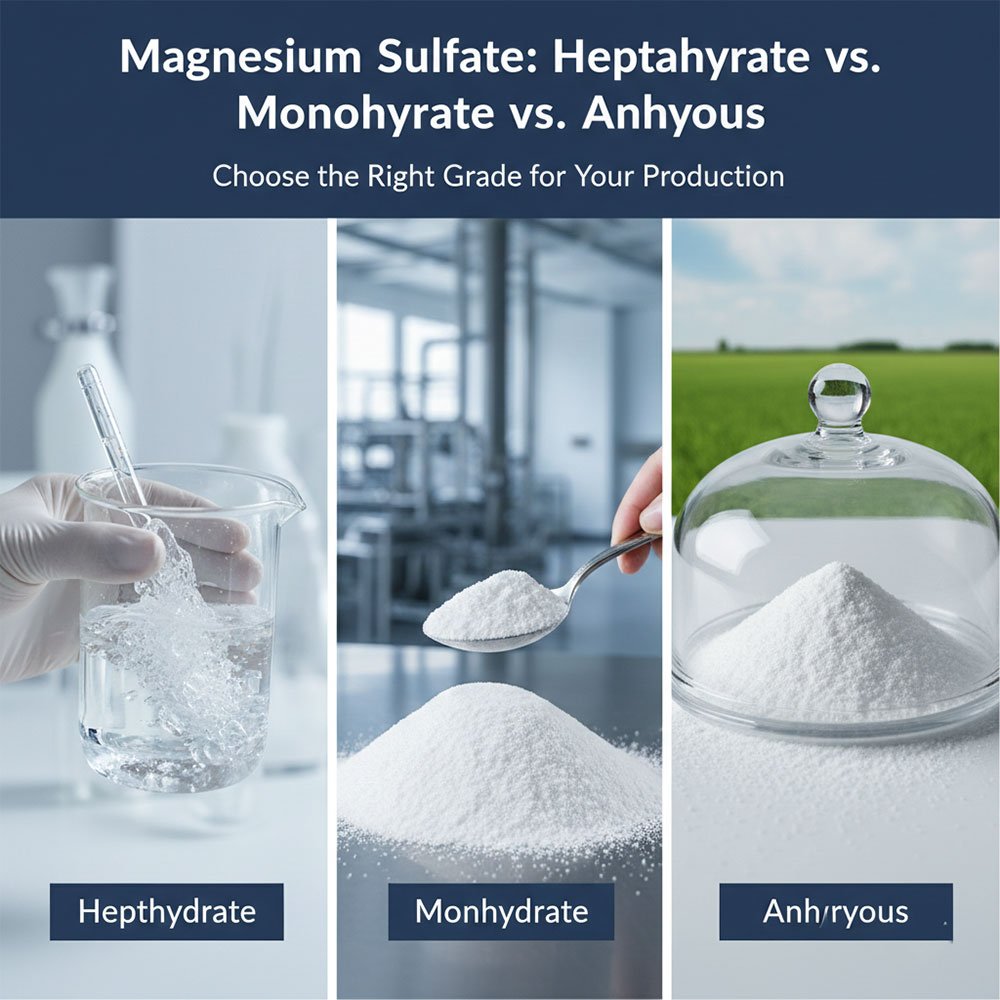
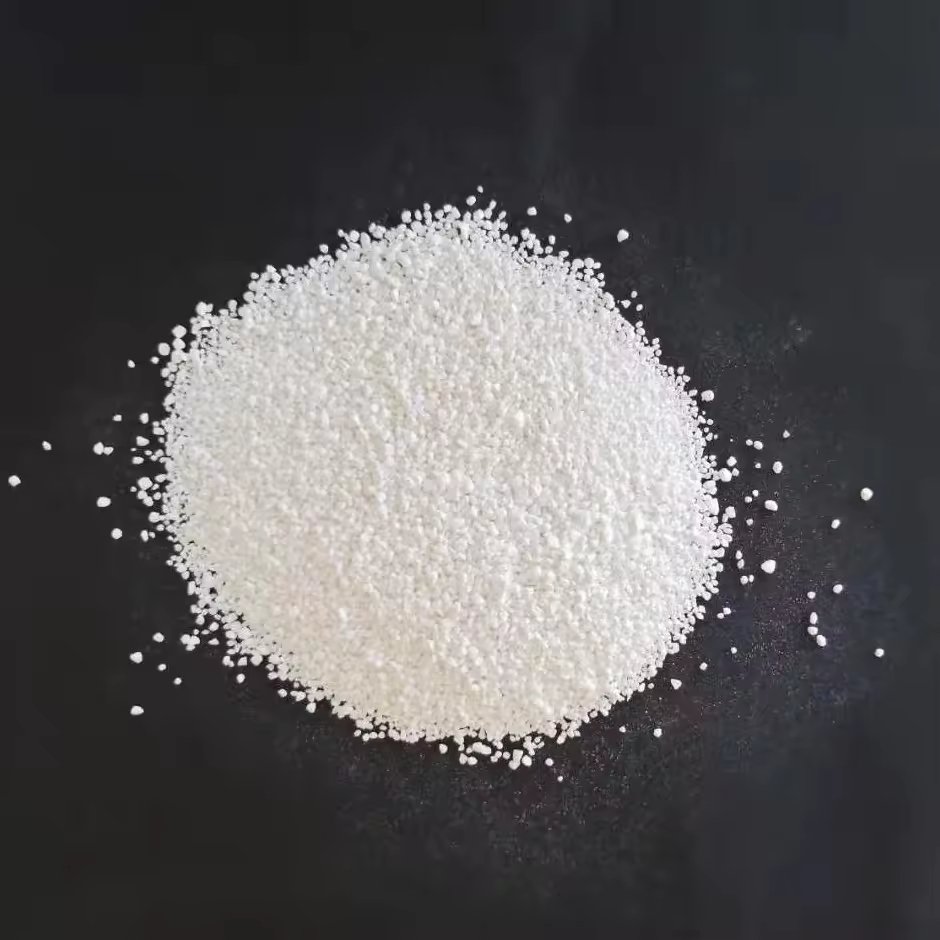
- Anhydrous State (MgSO₄): Appears as a white or slightly yellowish loose powder, highly sensitive to moisture.
- Hydrated State (MgSO₄·7H₂O): After absorbing water, it transforms into transparent or translucent needles or blocky crystals.
This process is reversible. When heated to approximately 150°C, the heptahydrate loses its water molecules and reverts to the anhydrous state, allowing for a cycle of dehydration and re-absorption.
III. Performance Advantages of Anhydrous Magnesium Sulfate Desiccant
Anhydrous Magnesium Sulfate is a highly effective desiccant. Its strong water-absorbing capability stems from the high affinity of the uncoordinated oxygen ions in its crystal lattice for water molecules.
During the drying process, it rapidly forms a stable hydrate through coordination with water molecules, effectively immobilizing moisture from the air or substance.
Compared to common desiccants (such as calcium chloride or silica gel), anhydrous magnesium sulfate is characterized by:
- Faster absorption rate and more thorough drying effect.
- It is a neutral desiccant that does not produce corrosive liquids or toxic byproducts.
Typical Characteristics:
- High Capacity: It can absorb water equivalent to a significant portion of its own weight.
- Neutral Property: As a neutral desiccant, it is non-corrosive and safe for sensitive organic compounds.
- Fast Absorption: It provides a more thorough drying effect, especially in organic solvents.
- Safety: The final product (Epsom Salt) is chemically benign and environmentally safe.
IV. Main Application Fields
1. Organic Solvent Dehydration
In laboratories and industrial chemical synthesis, MgSO₄ is the “go-to” agent for drying alcohols, ethers, and chlorinated hydrocarbons. Its chemical stability ensures it doesn’t react with the solvents it dries.
2. Pharmaceuticals and Food Storage
Its stability makes it ideal for moisture-proof packaging in the pharmaceutical industry, ensuring the shelf-life and potency of sensitive drugs.
3. Analytical Chemistry
It is an indispensable material for liquid sample dehydration and synthesis extraction experiments.
Caution: It is not suitable for drying alkaline gases (like ammonia) due to potential chemical reactions.
V. Modern Production and Storage Recommendations
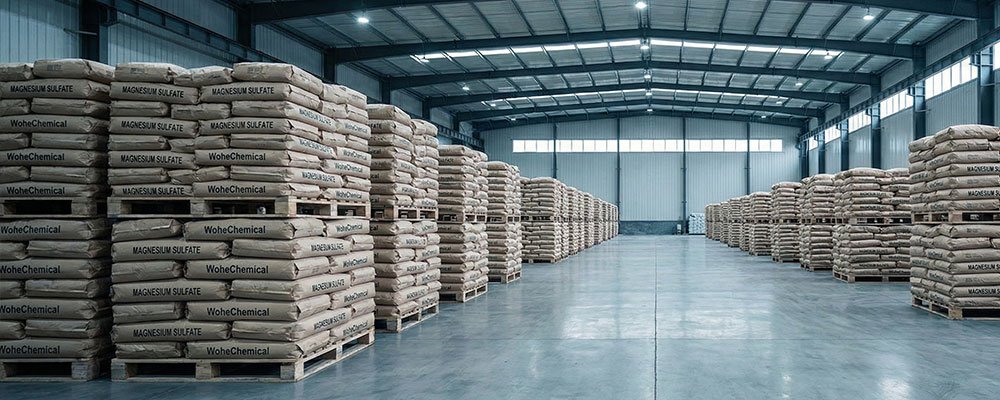
In modern industry, to maintain the high purity and hygroscopic performance of anhydrous magnesium sulfate, it is typically stored in hermetically sealed packaging with inert gas protection. Recommended packaging materials include polyethylene-lined bags or aluminum-plastic composite films to prevent moisture infiltration.
Additionally, some manufacturers utilize vacuum drying or hot air circulation technology to ensure the product is completely dehydrated before packaging, thus enhancing its long-term storage stability.
To maintain the high purity of Anhydrous Magnesium Sulfate Desiccant, it must be stored in hermetically sealed packaging. We recommend:
- Polyethylene-lined bags.1
- Aluminum-plastic composite films.
- Vacuum sealing or inert gas protection for long-term stability.
VI. Conclusion
As a versatile inorganic desiccant, Anhydrous Magnesium Sulfate combines strong chemical hygroscopicity with excellent stability. Whether in large-scale industrial production or precision laboratory research, its role as a neutral, efficient drying agent remains irreplaceable.
FAQ: Anhydrous Magnesium Sulfate Desiccant
Q: Why is MgSO₄ preferred over Calcium Chloride for drying organic liquids?
- A: Unlike Calcium Chloride, Magnesium Sulfate is neutral and does not form complexes with alcohols or amines, making it more versatile for organic chemistry.
Q: Can Anhydrous Magnesium Sulfate be reused?
- A: Yes. By heating the hydrated form to above 150°C, you can drive off the water and regenerate the anhydrous powder.
Q: How do I know when the desiccant is exhausted?
- A: The powder will lose its “free-flowing” nature and begin to clump or turn into distinct crystals (heptahydrate) as it saturates.