
Understand the heavy metal limits in fertilizer and feed. Discover the strict lead and arsenic in MgSO4 limits and food grade magnesium sulfate specifications.
Product Overview
In the global chemical trade, purity is the ultimate currency. Whether you are formulating water-soluble plant nutrients, mixing livestock feed, or manufacturing personal care products, ignoring trace contaminants can lead to catastrophic regulatory fines and product recalls.
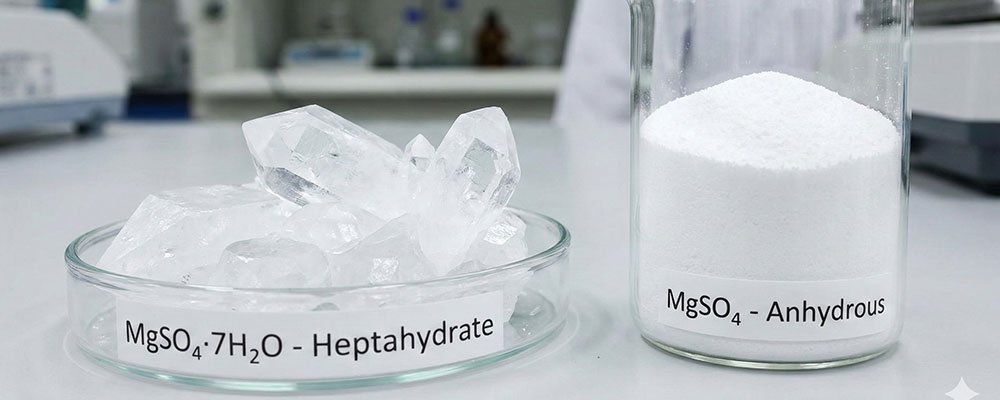
Understanding the heavy metal limits in fertilizer, feed, and food applications is non-negotiable for buyers in highly regulated markets like the EU and North America. At WoheChemical, we utilize advanced purification technologies to strictly control the levels of lead and arsenic in MgSO4. Our transparent approach to Quality Control (QC) ensures that every batch of our magnesium sulfate (MgSO4·7H2O and anhydrous) complies perfectly with your local statutory requirements.
(Set Alt Text to: Laboratory testing for heavy metal limits in fertilizer and magnesium sulfate purity)
Application Scenarios
The required purity level of magnesium sulfate directly dictates its end-use application:
- Precision Agriculture: While plants need magnesium and sulfur, toxic metals can accumulate in the soil and transfer into the food chain. Strict monitoring is required for greenhouse hydroponics and foliar sprays.
- Animal Nutrition (Feed Grade): Livestock are highly sensitive to heavy metal poisoning. Feed manufacturers must adhere to stringent European Food Safety Authority (EFSA) and FDA limits to prevent neurological and renal damage in cattle and poultry.
- Human Consumption & Cosmetics (Food/USP Grade): Requires the absolute highest purity. Bath salts (Epsom salt), food additives, and pharmaceuticals mandate near-zero heavy metal tolerances.
Product Advantages
Partnering with WoheChemical eliminates compliance anxiety for procurement managers:
- Advanced Trace Element Control: Our raw magnesite sourcing and multi-stage crystallization processes are specifically designed to strip out naturally occurring heavy metals.
- Batch-by-Batch COA: We provide a comprehensive Certificate of Analysis (COA) for every shipment, detailing the exact parts-per-million (ppm) of restricted elements.
- Multi-Grade Flexibility: From standard agricultural applications to rigorous food grade magnesium sulfate specifications, we tailor our production to match your specific market regulations.
Deep-Dive: Heavy Metal Limits by Grade
To help you navigate international compliance, here is a general comparison of acceptable heavy metal limits across different grades of Magnesium Sulfate:
| Contaminant | Agri-Grade (Fertilizer) | Feed Grade | Food/Pharma Grade (FCC/USP) | WoheChemical Commitment |
| Lead (Pb) | ≤ 15 – 20 ppm | ≤ 5 ppm | ≤ 2 ppm | Consistently below limits |
| Arsenic (As) | ≤ 10 – 15 ppm | ≤ 2 ppm | ≤ 2 – 3 ppm | Strictly monitored via ICP-OES |
| Cadmium (Cd) | ≤ 10 ppm | ≤ 2 ppm | ≤ 1 ppm | Undetectable in high-purity grades |
| Mercury (Hg) | ≤ 0.1 ppm | ≤ 0.1 ppm | ≤ 0.1 ppm | Zero tolerance |
For official guidelines on heavy metal tolerances in agricultural inputs, please refer to the United States Environmental Protection Agency (EPA) risk assessments on fertilizers. (Rank Math SEO: Authoritative External Link)
Usage Guide / Precautions
How to Read Your MgSO4 Specifications
When evaluating a supplier, always check the lead and arsenic in MgSO4 levels on the technical data sheet.
- Understand the Units: Heavy metals are typically measured in ppm (parts per million) or mg/kg (milligrams per kilogram), which are functionally equivalent.
- Beware of “Typical” vs. “Guaranteed” Analysis: A trustworthy supplier will provide a guaranteed maximum limit for heavy metals, not just a vague “typical” range.
- Solubility Check: Insoluble matter in magnesium sulfate is often a carrier for heavy metal impurities. A product with 100% water solubility (like WoheChemical’s premium grades) inherently carries a much lower risk of heavy metal contamination.
Meeting High-End Market Regulations
If you are importing into the European Union, your product must comply with REACH regulations and EFSA directives for feed/food. In the US, the Food Chemicals Codex (FCC) and US Pharmacopeia (USP) dictate the food grade magnesium sulfate specifications. Always communicate your final destination market to our sales team so we can allocate the exact compliant batch for your shipment.
FAQ
Q1: Why are there strict heavy metal limits in fertilizer?
A1: Over time, heavy metals like cadmium and lead can build up in agricultural soils. These toxic elements are then absorbed by crop roots and eventually consumed by humans or livestock, posing severe long-term public health risks.
Q2: What happens if the lead and arsenic in MgSO4 exceed feed grade limits?
A2: Using non-compliant industrial magnesium sulfate in animal feed can lead to heavy metal bioaccumulation in the animal’s liver and kidneys, resulting in poor growth rates, sickness, and the eventual rejection of the meat/dairy products by food safety inspectors.
Q3: Can WoheChemical meet custom food grade magnesium sulfate specifications for my cosmetic brand?
A3: Yes. We supply ultra-pure, high-grade Epsom salts specifically refined for the cosmetics and personal care industries, accompanied by full safety and purity documentation.