
Solve the magnesium sulfate caking problem. Discover expert tips for storing chemicals in high humidity, advanced packaging, and anti-caking agent MgSO4.
Product Overview
For global chemical buyers, especially those operating in the high humidity of Southeast Asia or the extreme heat of the Middle East, maintaining the physical integrity of bulk materials is a constant battle. The magnesium sulfate caking problem—where free-flowing crystals fuse into rock-hard solid blocks—is a major logistical and operational pain point.
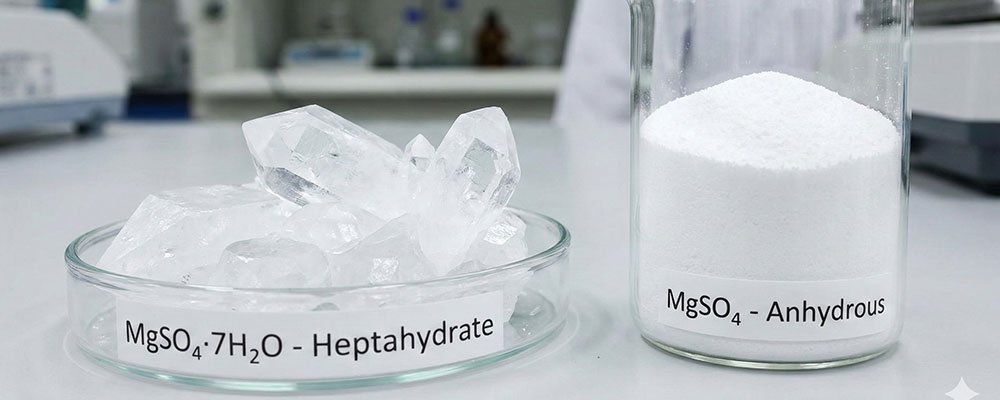
Caking does not necessarily change the chemical purity of MgSO4·7H2O or anhydrous MgSO4, but it makes unloading, mixing, and automated dosing nearly impossible. At WoheChemical, we engineer our production and packaging processes to actively combat moisture migration and temperature fluctuations, ensuring your cargo arrives and remains ready for immediate use.
(Upload an image illustrating how moisture creates liquid bridges between crystals. Set Alt Text to: Physics of the magnesium sulfate caking problem in high humidity)
Application Scenarios
Implementing strict anti-caking strategies is critical for buyers in extreme climates:
- Equatorial Maritime Shipping: Cargo crossing the equator experiences massive temperature swings, leading to “container rain” (condensation) that triggers caking.
- Tropical Agriculture: Fertilizer distributors in Southeast Asia face constant high humidity, requiring advanced packaging to maintain the flowability of fertigation nutrients.
- Desert Industrial Zones: Warehouses in the Middle East deal with extreme daytime heat and rapid nighttime cooling, accelerating the crystal bridging process in stored chemicals.
Product Advantages
WoheChemical proactively solves the magnesium sulfate caking problem before the product even leaves our factory. We offer three tiers of protection:
- Advanced Moisture-Barrier Packaging: We utilize extra-thick, heat-sealed inner PE (Polyethylene) liners within our 25kg and 1000kg Jumbo bags to completely block ambient humidity.
- Granulometry Control: We strictly control the particle size distribution. Uniform, dust-free crystals have less surface area contact, significantly reducing the mechanical friction and moisture bridging that cause clumping.
- Anti-Caking Agent MgSO4: For highly sensitive applications and ultra-long storage requirements, we can apply a specialized, industry-compliant anti-caking agent MgSO4 coating during the manufacturing process to keep the material free-flowing.
Storage Optimization: Standard vs. Extreme Climates
| Storage Parameter | Standard Temperate Climate | Extreme Hot & Humid Climate |
| Pallet Stacking | Up to 2 pallets high | Strictly 1 pallet high (Avoids pressure caking) |
| Ventilation | Standard warehouse flow | Climate-controlled or high-exhaust ventilation |
| Desiccants | Optional | Mandatory in shipping containers & storage |
| Stock Rotation | Standard FIFO | Strict 3-month turnover (FIFO) |
To understand the science behind why chemicals absorb moisture from the air, you can read more about Hygroscopy and Deliquescence. (Rank Math SEO: Authoritative External Link)
Usage Guide / Precautions
The Physics of Caking
Understanding the physics helps in storing chemicals in high humidity. When the ambient temperature drops, the relative humidity in the warehouse or shipping container spikes. The magnesium sulfate crystals absorb this surface moisture, dissolving slightly at the contact points. When the temperature rises again, the moisture evaporates, and the dissolved salt recrystallizes, forming a solid “bridge” between the particles. Over time, these microscopic bridges turn a 1000kg bag into a solid rock.
Storing Chemicals in High Humidity
To prevent this chain reaction:
- Never Break the Seal: Keep the inner PE liner tightly tied or heat-sealed until the exact moment of use.
- Avoid Direct Ground Contact: Always store bags on wooden or plastic pallets to prevent moisture from seeping up from the concrete floor.
- Manage Pressure: Pressure acts as a catalyst for caking. Never stack Jumbo bags on top of each other in a humid warehouse. The weight will crush the bottom layers into a solid mass.
FAQ
Q1: Does the magnesium sulfate caking problem mean the product is defective?
A1: No. Caking is a physical change, not a chemical degradation. The MgSO4·7H2O retains its exact magnesium and sulfur content. However, severe caking requires manual breaking or crushing, which drastically increases your labor costs and slows down production.
Q2: Is the anti-caking agent MgSO4 safe for agricultural or feed use?
A2: Yes. If an anti-caking agent is requested, we use organic, non-toxic, and fully water-soluble additives that comply strictly with agricultural, feed, and industrial regulations.
Q3: What should I do if a container arrives with signs of caking?
A3: Minor surface caking (often called “bag set”) can usually be broken by simply dropping the bag from a low height or applying light pressure. If you consistently operate in storing chemicals in high humidity, please inform our sales team so we can upgrade your packaging specifications before shipping.