Discover the vital role of Magnesium Sulfate in construction. Learn how MgSO4 enhances Magnesium Oxysulfate Cement and high-performance magnesium board manufacturing.
Product Overview
Magnesium Sulfate (MgSO4), commonly known in the construction industry as a key component for specialty cements, is a white crystalline inorganic salt. In the realm of building materials, it is primarily used in its heptahydrate (MgSO4·7H2O) or anhydrous form to react with Magnesium Oxide (MgO). This chemical reaction forms Magnesium Oxysulfate (MOS) Cement, a high-strength, air-dried binding material that serves as an eco-friendly alternative to traditional Portland cement.
Application Scenarios
Magnesium Sulfate is a cornerstone raw material in several modern construction sectors:
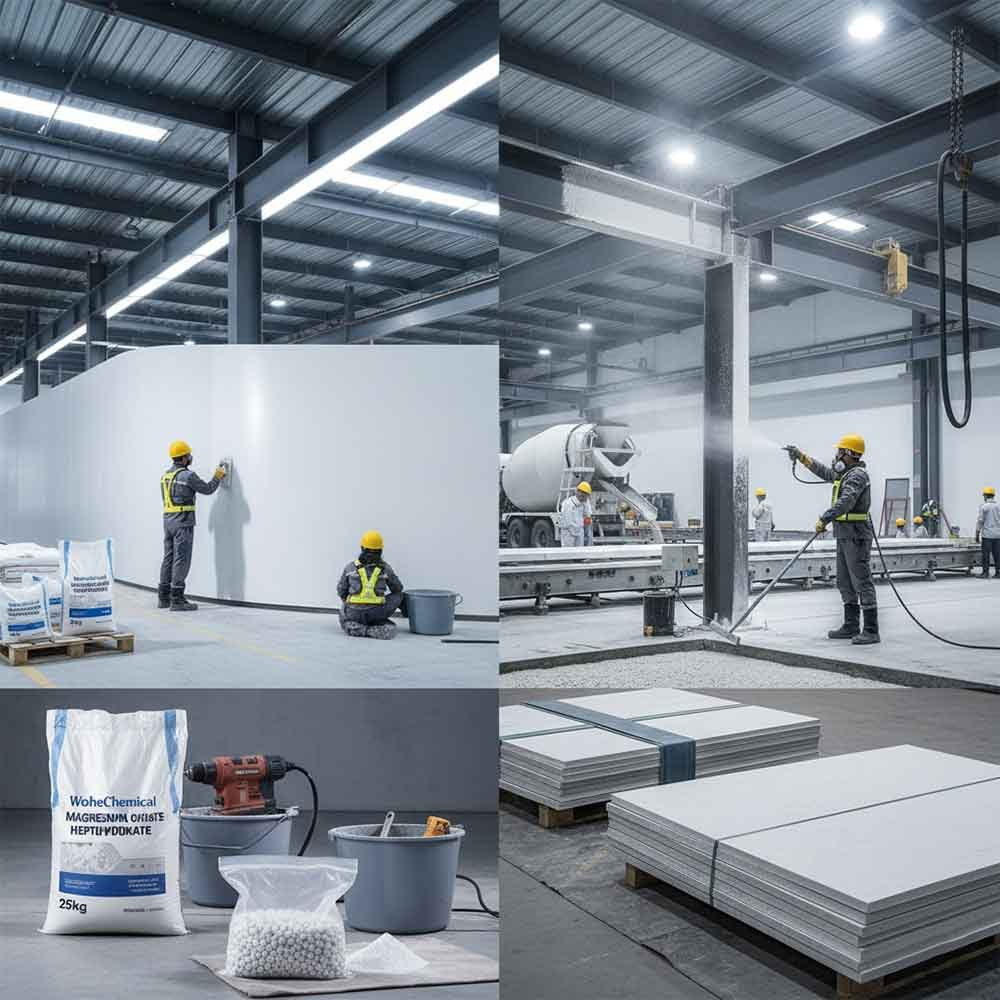
- Magnesium Oxysulfate (MOS) Cement: Used as a binder for decorative elements, lightweight partitions, and thermal insulation materials.
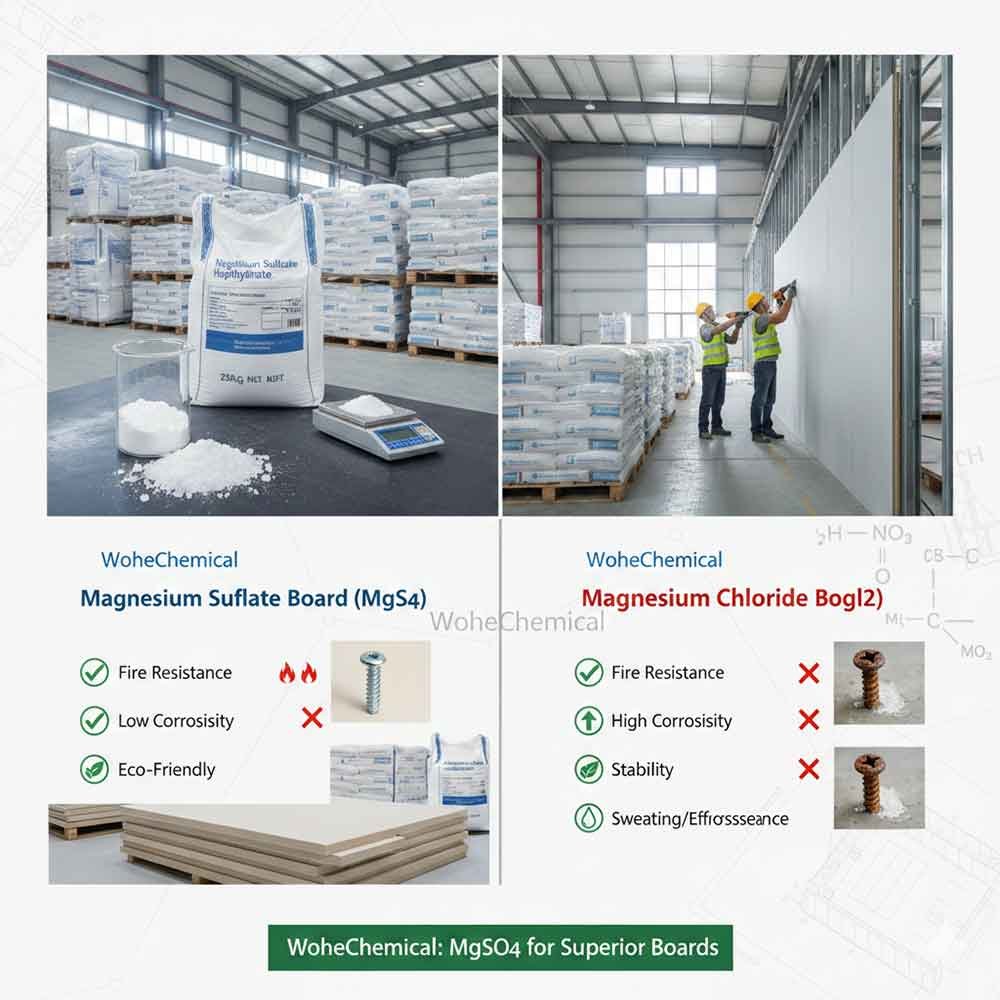
- Magnesium Board Manufacturing: A critical ingredient in producing “MGO Boards” or “Sulfate Boards,” which are used for fireproof wall panels, ceilings, and flooring substrates.
- Fireproofing Materials: Due to its high water-of-crystallization content, it acts as an effective fire retardant in specialized coating and boarding.
- Lightweight Aggregate Concrete: Used to improve the setting time and structural integrity of lightweight foamed concrete.
Product Advantages
- Superior Fire Resistance: Boards made with MgSO4 are non-combustible and can withstand extreme temperatures without releasing toxic fumes.
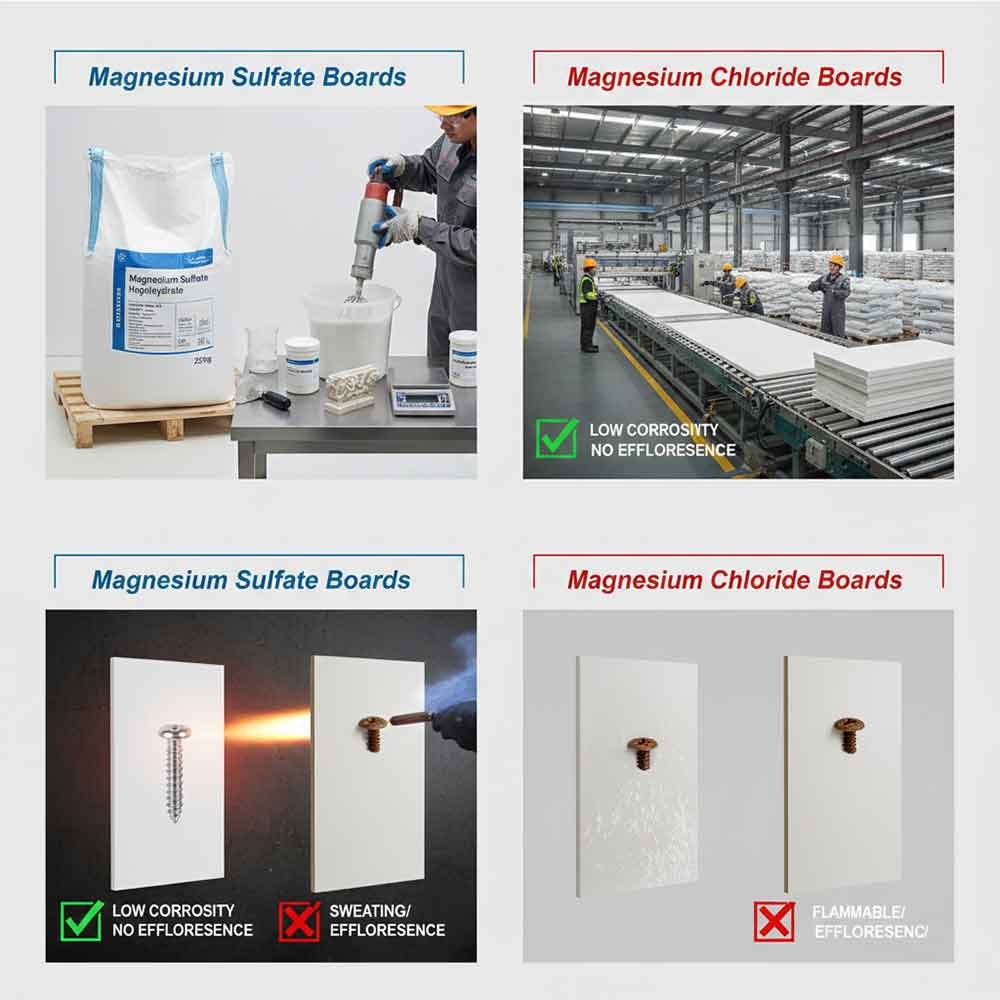
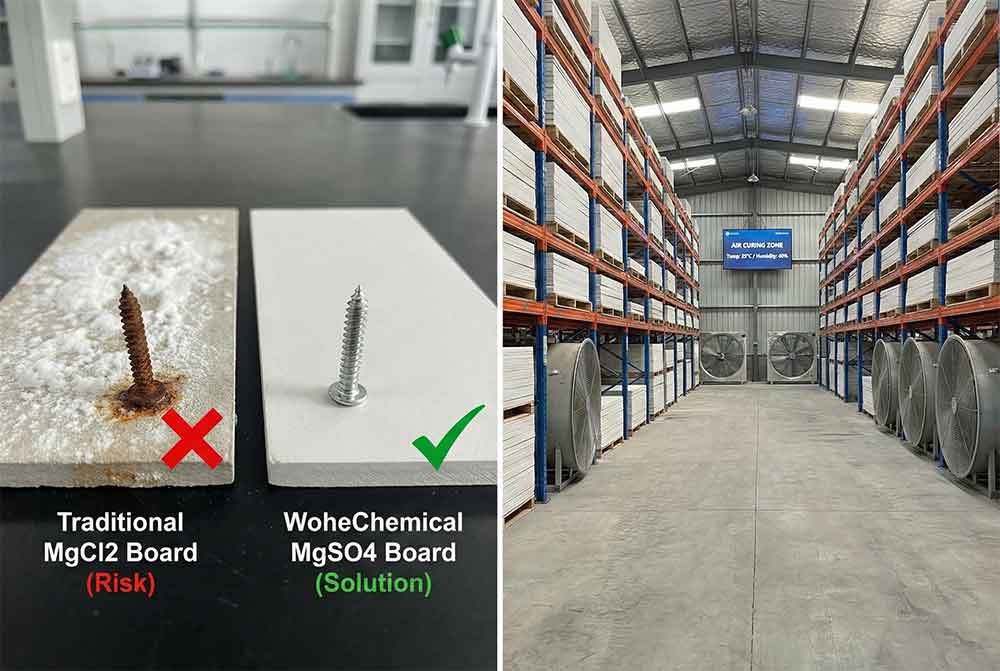
- Low Corrosivity: Unlike Magnesium Chloride (MgCl2), Magnesium Sulfate does not cause “sweating” (moisture absorption) or corrosion of steel reinforcements and fasteners.
- High Strength-to-Weight Ratio: MOS cement provides excellent compressive and flexural strength while remaining significantly lighter than traditional concrete.
- Environmental Sustainability: The production of Magnesium Oxysulfate cement involves lower carbon emissions compared to standard cement kilns.
Usage Guide and Precautions
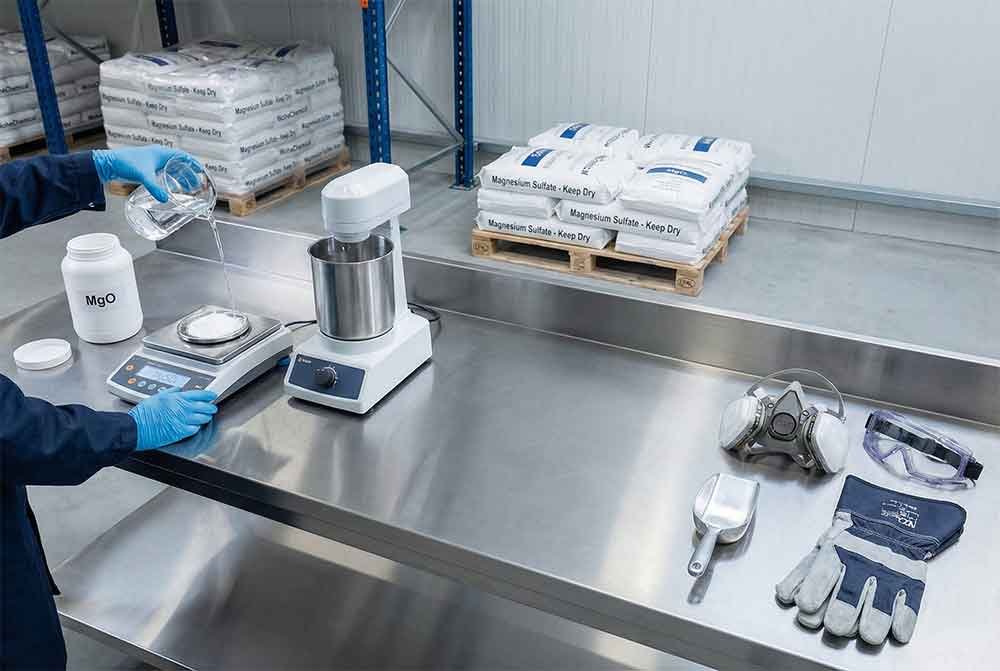
- Optimal Mixing Ratio: To ensure structural integrity, the molar ratio of MgO to MgSO4 must be strictly controlled according to the specific technical requirements of the board or cement being produced.
- Water Quality: Always use clean, industrial-grade water for dissolving MgSO4·7H2O to prevent impurities from affecting the setting time.
- Storage: Magnesium Sulfate is hygroscopic. Store in a cool, dry, and well-ventilated warehouse. Keep bags tightly sealed to prevent caking caused by moisture absorption.
- Safety Handling: While generally safe, workers should wear dust masks and gloves during handling to avoid skin irritation or inhalation of fine particles.
Frequently Asked Questions (FAQ)
Q1: Why choose Magnesium Sulfate over Magnesium Chloride for board manufacturing? A1: Magnesium Sulfate is preferred for high-end boards because it eliminates the “efflorescence” (white salt powder) and metal corrosion issues commonly associated with Magnesium Chloride-based boards, making it ideal for use with steel frames.
Q2: Does Magnesium Sulfate cement require special curing conditions? A2: Yes, MOS cement is an air-cured material. It requires a controlled dry environment to develop full strength, unlike Portland cement which requires wet curing.