
Discover the crucial role of magnesium sulfate in paper manufacturing. Learn how pulp bleaching chemicals use MgSO4 for cellulose protection and high-yield production.
Product Overview
In the modern pulp and paper industry, achieving brilliant paper whiteness without degrading the structural integrity of the fibers is a delicate chemical balancing act. Magnesium sulfate in paper manufacturing is not just an additive; it is a critical cellulose protector.
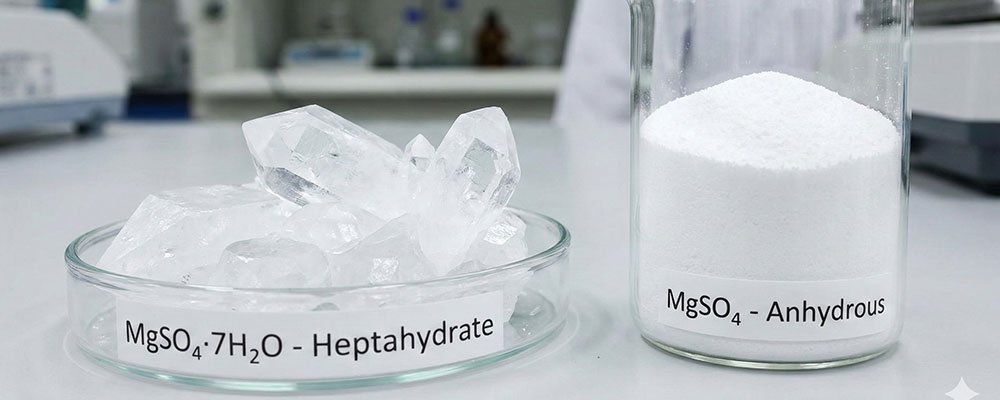
During the harsh oxygen delignification and hydrogen peroxide bleaching stages, the cellulose chains are highly vulnerable to degradation. At WoheChemical, we supply premium, high-purity magnesium sulfate (MgSO4·7H2O and MgSO4) specifically refined to meet the massive volume and strict chemical requirements of global paper mills.
(Upload an illustrative diagram showing Mg ions deactivating transition metals here. Set Alt Text to: Mechanism of magnesium sulfate in paper manufacturing and pulp bleaching)
Application Scenarios
The use of specialized pulp bleaching chemicals is essential for producing high-quality paper products. Our magnesium sulfate is deployed in several key stages of the pulping process:
- Hydrogen Peroxide Bleaching (H2O2): Used extensively as a stabilizer to prevent the rapid, wasteful decomposition of hydrogen peroxide.
- Oxygen Delignification: Added before the oxygen stage to protect the pulp viscosity and maintain the mechanical strength of the paper fibers.
- Mechanical Pulping: Applied in the bleaching of groundwood or thermomechanical pulp (TMP) to ensure maximum brightness gain while preserving yield.
Product Advantages
Not all magnesium sulfate is suitable for paper mills. Transition metals (like Iron, Copper, and Manganese) act as catalysts that destroy bleaching agents and attack cellulose. WoheChemical’s paper-grade magnesium sulfate offers:
- Ultra-Low Transition Metals: Our advanced refining process strips out heavy metals, ensuring that our product stabilizes your bleaching process rather than hindering it.
- Enhanced Cellulose Protection MgSO4: By effectively deactivating harmful metal ions in the wood pulp, our product preserves the degree of polymerization of the cellulose, resulting in stronger tear and tensile strength for the final paper.
- Bulk Supply Stability: Paper mills consume massive quantities. We offer robust supply chain solutions, including 1000kg/1250kg Jumbo bags and bulk vessel shipments, ensuring your production lines never stop.
Standard Grade vs. Paper Manufacturing Grade
Understanding the impurity limits is critical for mill procurement:
| Chemical Parameter | Standard Industrial Grade | WoheChemical Paper Grade | Impact on Pulp & Paper |
| Iron (Fe) | ≤ 15 ppm | ≤ 5 ppm | High iron causes paper yellowing and peroxide waste. |
| Manganese (Mn) | Variable | Strictly Controlled | Mn radicals violently attack cellulose chains. |
| Water Insoluble Matter | ≤ 0.1% | ≤ 0.01% | Prevents scaling and blockages in bleaching towers. |
| MgSO4 Content | 98% | ≥ 99.5% | Ensures precise and predictable dosing in the mill. |
For industry standards regarding pulp bleaching and chemical recovery, we highly recommend the resources provided by TAPPI (Technical Association of the Pulp and Paper Industry). (Rank Math SEO: Authoritative External Link)
Usage Guide / Precautions
The Chemistry of Cellulose Protection
How exactly does cellulose protection MgSO4 work? Wood pulp naturally contains trace amounts of transition metals from the soil. During bleaching, these metals catalyze the breakdown of hydrogen peroxide into highly reactive hydroxyl radicals. These radicals don’t just bleach the pulp; they aggressively chop up the cellulose polymers, weakening the paper.
When magnesium sulfate is added, the magnesium ions (Mg2+) form complex compounds with these transition metals, effectively “locking” them up and deactivating them. This allows the peroxide to safely bleach the lignin without destroying the cellulose.
Dosing and System Integration
- Dosing Point: MgSO4 is typically dissolved into a clear stock solution (often 10% to 20% concentration) and injected right before the oxygen mixer or the peroxide bleaching tower.
- Dosage Rate: The exact dosage depends on the transition metal profile of the incoming wood chips, but it generally ranges from 0.1% to 0.5% based on oven-dried (OD) pulp weight.
- Storage: Keep bulk bags in a dry environment. MgSO4·7H2O is prone to caking under heavy pressure and high humidity, so avoid stacking pallets too high in the mill warehouse.
FAQ
Q1: Why is magnesium sulfate in paper manufacturing preferred over sodium silicate for stabilization?
A1: While sodium silicate is also a stabilizer, it causes severe scaling (silica buildup) in the mill’s pipes, heat exchangers, and chemical recovery boilers. Magnesium sulfate provides excellent cellulose protection without the catastrophic scaling issues associated with silicates.
Q2: Should a paper mill purchase MgSO4·7H2O (Heptahydrate) or Anhydrous MgSO4?
A2: MgSO4·7H2O is the most common choice for paper mills because it dissolves very easily in cold water to make the liquid dosing solution. Anhydrous can be used, but it requires more careful mixing as it generates heat when dissolving.
Q3: How does WoheChemical ensure steady supply for large paper mills?
A3: We understand that pulp mills operate 24/7. We offer long-term supply contracts, strategic port-side warehousing, and automated FIBC (Jumbo bag) loading to ensure continuous, on-time delivery.