1.0 Introduction: The Versatility of an Essential Industrial Compound
Magnesium sulfate (MgSO₄) is a fundamental inorganic chemical compound whose broad utility makes it an indispensable component across a multitude of industrial sectors. This report provides a systematic analysis for industry decision-makers, detailing the specific functions, technical principles, and strategic value of MgSO₄. By deconstructing its role as a process agent, raw material, and performance enhancer, this document illuminates why this seemingly simple compound remains a cornerstone of modern manufacturing.
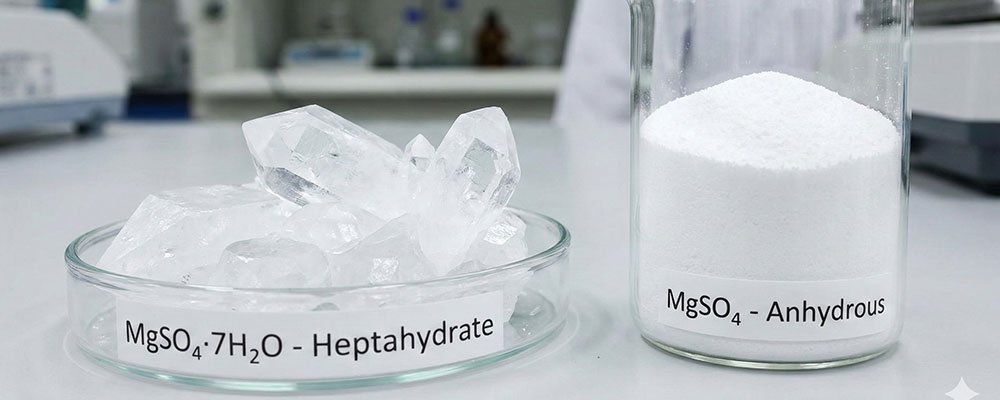
The compound is primarily available in three industrial forms: heptahydrate (MgSO₄·7H₂O), monohydrate (MgSO₄·H₂O), and anhydrous (MgSO₄). The selection of a specific form is dictated by process requirements, such as desired solubility or hygroscopic properties. Furthermore, the adherence to high-purity standards is a critical parameter. This level of purity signifies minimal impurities, ensuring process stability, predictable chemical reactions, and superior final product quality in demanding applications.
This analysis extends beyond current uses to offer a forward-looking perspective. It will examine the expanding role of magnesium sulfate in advancing sustainable development goals, particularly in environmental management, and its emerging potential in high-technology fields, positioning it as a material of both enduring relevance and future opportunity.
2.0 Core Properties and Technical Specifications for Industrial Use
A thorough understanding of magnesium sulfate’s fundamental properties and technical standards is crucial for its effective and efficient application in complex industrial processes. Its chemical behavior, physical form, and purity level directly influence its performance, from accelerating chemical reactions to ensuring the structural integrity of building materials.
The primary forms of industrial-grade magnesium sulfate are distinguished by their degree of hydration, which dictates their physical characteristics and suitability for specific applications:
- Heptahydrate (MgSO₄·7H₂O): Commonly found as colorless crystals or white particles, this is a stable, highly soluble form used in a wide range of wet chemical processes.
- Monohydrate (MgSO₄·H₂O): Containing a single water molecule, this form exhibits relatively weaker hygroscopic (water-absorbing) properties compared to its anhydrous counterpart.
- Anhydrous (MgSO₄): A white powder with strong hygroscopic properties, making it an exceptionally effective drying agent in organic synthesis and other moisture-sensitive applications.
The specification of 99% high-purity industrial-grade magnesium sulfate is a critical benchmark for high-specification applications, guaranteeing an extremely low level of impurities essential for sectors like pharmaceuticals and advanced materials. However, grades of 90% and higher are widely used for general industrial purposes, offering a balance of performance and cost-effectiveness. This tiered approach to purity allows for optimized material selection based on specific process tolerances and economic considerations.
Key advantages that facilitate its large-scale industrial use include its good chemical stability, high solubility in water, and classification as a non-hazardous chemical. This simplifies logistics, reduces the costs and complexities associated with storage and transportation, and broadens its accessibility for diverse industrial users. These intrinsic properties are the foundation upon which its vast range of practical applications is built.
3.0 A Cross-Sector Analysis of Key Industrial Applications
Magnesium sulfate’s true industrial value is demonstrated through its remarkable functional diversity. It performs a wide array of roles, acting as a critical process agent, a foundational raw material, and a key performance enhancer. The following subsections deconstruct its specific function and strategic impact within major industrial domains, showcasing its adaptability to different chemical and physical process requirements.

3.1 Construction and Building Materials
In the construction sector, magnesium sulfate serves two critical and distinct functions that improve both the process of construction and the quality of the final materials.
First, it acts as a retarder in cement production, where it is used to precisely control and adjust the setting time of concrete. By slowing the hydration process, it prevents premature hardening, which is crucial for large-scale pours and ensuring structural integrity. For instance, the addition of just 0.3% MgSO₄ can extend the initial setting time of C30 concrete to 4.5 hours, preventing structural defects that can arise from rapid curing.
Second, it is a key reactant with magnesium oxide to form magnesium oxychloride cement (Sorel cement), a material highly valued for its excellent lightweight, fireproof, and corrosion-resistant properties. This makes it a preferred choice for manufacturing high-performance products such as fireproof boards (防火板) and lightweight partition walls.
3.2 Chemical and Process Manufacturing
Magnesium sulfate makes multifaceted contributions to chemical and textile manufacturing, where its chemical properties are leveraged to optimize reactions, improve product quality, and enhance process efficiency.
- Chemical Synthesis: It serves as a foundational raw material for producing other essential magnesium compounds, such as magnesium oxide. In organic synthesis, its anhydrous form is widely used as an effective drying agent to remove trace water from reaction systems, while it also functions as a stable carrier for catalysts.
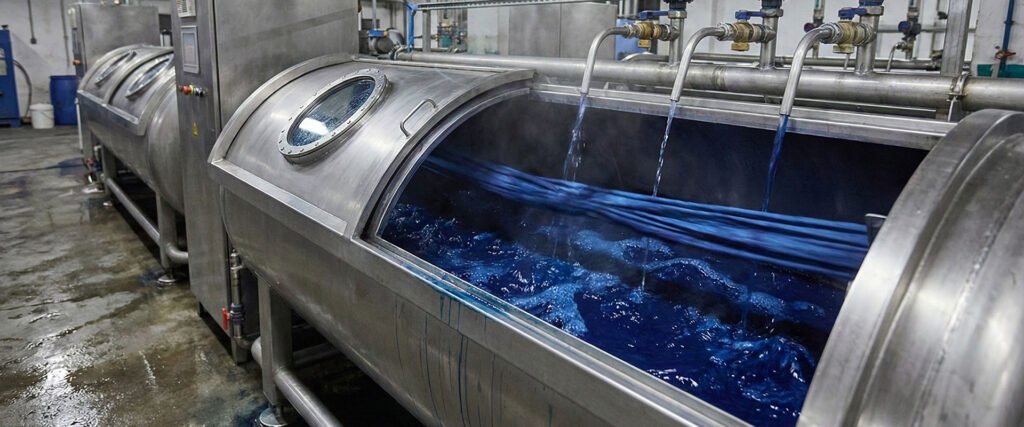
- Textile Dyeing: MgSO₄ acts as a mordant and pH regulator. It forms stable complexes with reactive dyes, significantly improving their adhesion to textile fibers. A notable case from a Zhejiang textile factory demonstrated that using a 20g/L MgSO₄ solution improved color fastness to grade 4 or higher, ensuring vibrant and long-lasting colors.
- Pulp and Paper Industry: In the sulfite pulping process, magnesium sulfate functions as a delignification aid, helping to remove lignin from wood pulp more efficiently. Data shows that the addition of 0.5% MgSO₄ can increase the delignification rate by 2.3%. It also serves secondary roles as a filler and as an agent to improve the flexibility and tear resistance of the final paper product.
- Battery Materials: In the rapidly growing new energy sector, high-purity magnesium sulfate is emerging as a critical precursor for advanced materials. For example, one company utilizes MgSO₄ in a co-precipitation method to produce high-purity lithium cobalt oxide (LiCoO₂), a key component in cathodes for lithium-ion batteries.
3.3 Environmental Management and Infrastructure
Magnesium sulfate plays a critical role in environmental protection and the maintenance of public infrastructure, offering effective and economical solutions to pressing challenges like pollution control and seasonal road safety.
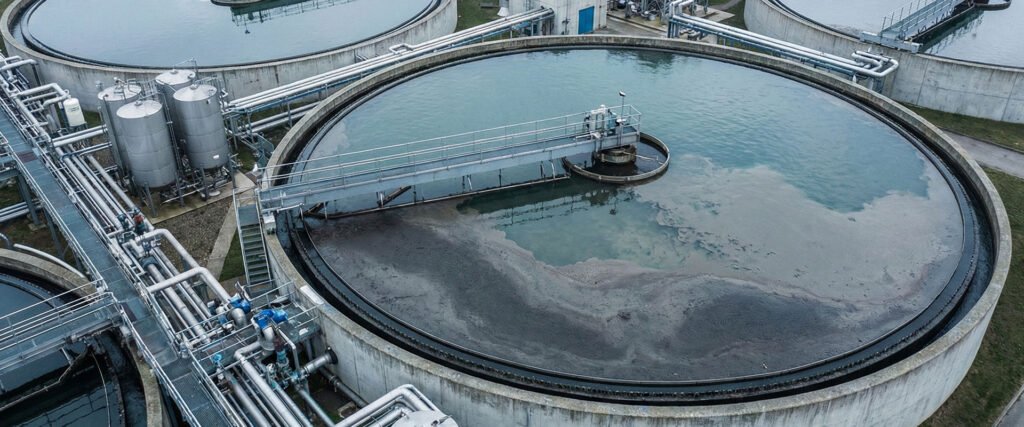
In industrial wastewater treatment, it serves as a versatile agent for comprehensive water quality management:
- Heavy Metal Precipitation: It is used with reagents like sodium hydroxide to treat industrial effluent, particularly from electroplating facilities. In one documented case, this process successfully reduced the lead ion concentration in wastewater to below the regulatory limit of 0.1mg/L.
- Nutrient Removal: It has proven effective in removing phosphates from water, helping to combat eutrophication in water bodies.
- pH Neutralization: It is employed to neutralize acidic wastewater, adjusting the pH to a safe, neutral range before discharge.
As a de-icing agent, magnesium sulfate offers a more environmentally sound alternative to pure sodium chloride. When mixed with salt, it can lower the freezing point of water to -25°C. The municipality of Harbin, for example, uses this mixture to de-ice roads, a strategy that significantly reduces the corrosive damage to concrete road surfaces compared to using salt alone. Furthermore, it is also used as a corrosion inhibitor in industrial water systems to protect metal pipes and equipment.

3.4 Agribusiness and Food Production
The impact of magnesium sulfate extends from the soil to the final consumer product, playing a vital role in agriculture, animal husbandry, and food processing.
- Agriculture: Its primary role is as a magnesium fertilizer. Magnesium is a core component of the chlorophyll molecule, making it essential for photosynthesis. Its application is particularly beneficial for crops in acidic or sandy soils, which are often deficient in this vital nutrient, thereby boosting crop yield and quality.
- Animal Husbandry: As a feed additive, it is used to supplement magnesium for livestock and poultry, ensuring proper metabolic function and supporting overall animal health and productivity.
- Food and Beverage Processing: In this sector, it serves several specific functions, including as a nutrient fortifier and fermentation aid. For example, a sports drink brand adds 50mg of MgSO₄ per 100ml to replenish electrolytes, while a brewery adds 15mg/L of MgSO₄ to its wort to promote yeast growth, shortening the fermentation cycle by 12 hours.

3.5 Specialized and Niche Industrial Applications
Beyond major industries, the adaptability of magnesium sulfate is demonstrated in a variety of specialized applications where its unique properties solve specific process challenges.
| Industry/Field | Specific Function and Cited Example |
| Leather Tanning | Acts as an impregnating agent in a mixture with sulfuric acid to control pH (2.8-3.2). A Hebei factory used it to increase leather shrinkage temperature by 15°C. |
| Ceramics | Serves as a glaze additive to improve surface gloss. A Jingdezhen factory added 1.2% MgSO₄ to achieve a glossiness of 85GU. |
| Tobacco Processing | Functions as a humectant to maintain moisture. A Yunnan factory used 0.8% MgSO₄ to control moisture deviation within ±0.5%. |
| Pharmaceuticals | Used externally as an astringent. A 50% solution for treating boils showed 92% effectiveness in a 3-day clinical observation. |
| Rubber & Plastics | Acts as a filler and reinforcing agent to improve the performance and stability of rubber and plastic products. |
The sheer breadth of these applications underscores magnesium sulfate’s status as a uniquely versatile industrial chemical, capable of delivering value across a remarkably diverse set of manufacturing contexts.
4.0 Strategic Value in Sustainable Development and Emerging Technologies
Magnesium sulfate is evolving from a traditional commodity chemical into a key enabler for modern industrial goals related to sustainability and technological innovation. Its properties align directly with the growing demands for greener manufacturing and high-performance materials.
In the circular economy and green manufacturing, its role is expanding significantly. Stricter environmental regulations are creating new markets and cost-saving opportunities for companies proficient in MgSO₄-based recovery and treatment processes. This positions MgSO₄ not merely as a raw material but as a tool for regulatory compliance and circular economy leadership. The trend of recovering and purifying MgSO₄ from industrial by-products exemplifies this shift, providing a cost-effective material stream while simultaneously minimizing industrial waste and reducing environmental footprints.
Looking ahead, magnesium sulfate holds significant potential in emerging high-technology sectors. Its established role as a precursor for new energy materials, particularly in battery cathodes, is a clear indicator of its future value. As industries advance, its potential applications in the formulation of electronic chemicals and other advanced materials position it as a critical raw material for the technologies that will define the next generation of industrial development.
5.0 Conclusion: The Enduring Value Proposition for Industry Leaders
This analysis reaffirms that magnesium sulfate is a highly versatile and functionally indispensable material. Its utility spans a vast range of industries, from heavy construction and chemical manufacturing to environmental protection and advanced technology. Far from being a simple bulk chemical, it is a sophisticated enabler of process efficiency, product quality, and sustainable practices.
Its primary value drivers for modern industry can be summarized as:
- Functional Diversity: Its ability to act as a retarder in cement, a mordant in textiles, a precipitant in water treatment, and a filler in plastics showcases its unparalleled adaptability.
- Process Efficiency: It consistently contributes to enhancing manufacturing yields, improving final product quality, and ensuring the stability of complex industrial processes.
- Environmental Contribution: It provides effective and economical solutions for pollution control, wastewater purification, and resource recovery, making it a key component of sustainable industrial operations.
- Economic Viability: It offers a cost-effective solution for a multitude of industrial challenges, with additional economic benefits realized through recycling and circular economy initiatives.
Consequently, for industry leaders, mastering the application of high-purity magnesium sulfate is no longer a matter of simple process optimization but a strategic imperative for building resilient supply chains, achieving sustainability targets, and securing a competitive edge in next-generation industries.
Frequently Asked Questions (FAQ)
Q1: What is the difference between Magnesium Sulfate Heptahydrate and Anhydrous? A1: The main difference is the water content. Heptahydrate (MgSO4·7H2O) contains seven water molecules and is crystalline, often used in agriculture and baths. Anhydrous (MgSO4) has no water content, is a powder, and is primarily used as a drying agent or in applications where moisture must be minimized.
Q2: Is Magnesium Sulfate hazardous to transport? A2: No, Magnesium Sulfate is generally classified as a non-hazardous chemical for transport. This makes it easier and more cost-effective to ship internationally compared to hazardous chemical alternatives.
Q3: Can Magnesium Sulfate be used for water treatment? A3: Yes, it is widely used in industrial wastewater treatment. It helps precipitate heavy metals, neutralize pH levels, and remove excess nutrients like phosphates.
