
Magnesium Sulfate Monohydrate Fertilizer (MgSO₄·H₂O) is a crucial secondary nutrient source, supplying essential magnesium (Mg) and sulfur (S). Valued for its excellent solubility and high utilization rate, it has become an indispensable integrated nutrient source in modern agriculture and the chemical industry.
Magnesium is a core component of chlorophyll, directly involved in plant photosynthesis and energy transfer. Consequently, Magnesium Sulfate Monohydrate holds significant economic and ecological importance across sectors like agriculture, chemical industry, and medicine. Compared to other magnesium fertilizers, its higher solubility, faster absorption, and greater utilization rate make it an ideal, integrated magnesium and sulfur source for agricultural production.
I. Highly Soluble and Eco-Friendly Fertilizer
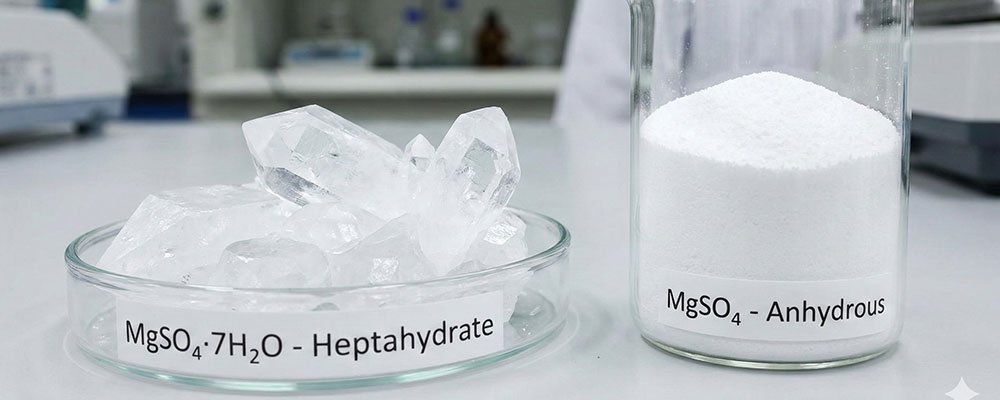
Magnesium Sulfate Monohydrate Fertilizer is a highly efficient, water-soluble mineral. Its solubility exceeds that of traditional Epsom salts (Heptahydrate), making it ideal for modern fertigation systems and precision agriculture.
- Dual Nutrition: Contains approx. 9.8% Magnesium and 13% Sulfur.
- Boosts Yield: Magnesium is the core of chlorophyll, directly driving photosynthesis.
- Improves Quality: Sulfur enhances protein synthesis and fruit flavor, particularly in oil-rich crops.
- Rapid Absorption: The monohydrate form is absorbed faster by plants, preventing common magnesium deficiencies.
✅ Recommended Uses: Widely applied to grain crops, cash crops, vegetables, fruit trees, flowers, and soilless cultivation systems.
✅ Application Methods: Highly effective as a base fertilizer, top dressing, or foliar spray, offering high absorption and rapid supplementation of Mg and S.
II. Advantages in Agricultural Applications
Whether used as a base fertilizer or foliar spray, Magnesium Sulfate Monohydrate Fertilizer provides targeted benefits for high-value crops:
- Fruit Trees: Improves fruit sweetness, size, and color vibrancy.
- Vegetables: Increases leaf thickness and strengthens disease resistance.
- Grain Crops: Promotes plump grain filling and increases photosynthetic efficiency.
- Flowers: Ensures vibrant petal colors and extends blooming periods.
When used synergistically with N, K fertilizers, and organic fertilizers, it effectively improves soil structure, prevents magnesium loss, and enhances crop resistance to environmental stresses (drought, low temperature, and diseases).
III. Function as a Feed Additive
Beyond the soil, Magnesium Sulfate Monohydrate Fertilizer is a vital magnesium supplement in the animal feed industry to support metabolism and nervous system health.
- Non-Ruminants (e.g., Poultry, Swine): Have lower magnesium requirements; a suggested addition rate is 0.04% to 0.06% of the total feed.
- Ruminants (e.g., Cattle, Sheep): Have higher magnesium needs; it is recommended to add about 0.2% of Magnesium Sulfate Monohydrate to the total feed to prevent hypomagnesemia (grass tetany) and muscle spasms.
Appropriate magnesium supplementation helps maintain bone health, muscle contraction, and energy metabolism balance in livestock and poultry, positively contributing to improved growth rate and feed conversion efficiency.
IV. International Application and Development Trends
Currently, Magnesium Sulfate Monohydrate is extensively used in the agricultural, pharmaceutical, and chemical sectors of developed countries, including the United States, Canada, Japan, Germany, and France.
It shows broad market prospects in areas such as green agriculture, eco-friendly fertilizers, animal nutritional supplements, medical preparations, and high-purity chemical raw materials.
With the growing global demand for sustainable agriculture and environmentally friendly fertilizers, Magnesium Sulfate Monohydrate is establishing itself as the preferred product among the new generation of high-efficiency magnesium-sulfur fertilizers.
FAQ: Magnesium Sulfate Monohydrate
Q: What is the difference between Magnesium Sulfate Monohydrate and Heptahydrate?
- A: Monohydrate (MgSO₄·H₂O) has a higher magnesium concentration and faster solubility compared to Heptahydrate (MgSO₄·7H₂O), which contains more water molecules.
Q: Can I mix this fertilizer with NPK fertilizers?
- A: Yes, it is highly compatible with Nitrogen, Phosphorus, and Potassium fertilizers, often improving the overall nutrient uptake of the crop.
Q: How do I apply it as a foliar spray?
- A: Typically, a concentration of 1% to 2% is used. Always ensure the powder is fully dissolved before spraying to avoid leaf scorch.