For global buyers sourcing magnesium sulfate, price is one of the most important considerations, but it is rarely determined by a single factor. A quotation depends not only on the product itself, but also on the raw materials, production process, packaging, order volume, and export logistics behind it.
Whether you are buying magnesium sulfate for agriculture, feed, or industrial applications, understanding how pricing works can help you compare suppliers more accurately and make better purchasing decisions.
This guide explains the main factors that influence magnesium sulfate pricing for international buyers and why two offers for the “same product” may differ significantly.
Why Magnesium Sulfate Prices Vary Between Suppliers
Many buyers assume magnesium sulfate pricing should be simple, but in practice, quotations can vary because suppliers are not always offering the same grade, packaging, purity level, or delivery terms.
A lower price does not always mean lower total cost. In some cases, a seemingly cheaper offer may involve:
- lower active nutrient content
- weaker packaging
- shorter weight loading
- missing inspection support
- limited documentation
- less stable delivery performance
That is why buyers should understand what is included in a quotation before comparing prices.
1. Raw Material Costs
One of the biggest cost drivers in magnesium sulfate production is the cost of raw materials. Magnesium sulfate is commonly produced using magnesium-bearing raw materials together with sulfuric acid or related chemical processing routes.
The cost of these raw materials may change due to:
- mining supply conditions
- environmental regulation
- energy costs
- sulfuric acid market movements
- regional production policies
When raw material costs rise, magnesium sulfate prices often move upward as well. Suppliers with stable raw material sourcing and production bases may be better positioned to offer more consistent quotations.
2. Product Grade and Quality Requirements
Different grades of magnesium sulfate have different production requirements, and this directly affects price.
Industrial Grade
Industrial grade is often the most cost-competitive option when the application does not require stricter impurity control or specialized testing.
Agricultural Grade
Agricultural grade may require good water solubility, low insoluble matter, and stable nutrient content, especially for fertigation, foliar spray, or water-soluble fertilizer production.
Feed Grade
Feed-grade magnesium sulfate generally requires stricter control of impurities such as heavy metals, along with more detailed testing and documentation support.
In general, the more demanding the quality standard, the more processing, testing, and quality control may be required, which can increase the final price.
3. Hydration State and Active Content
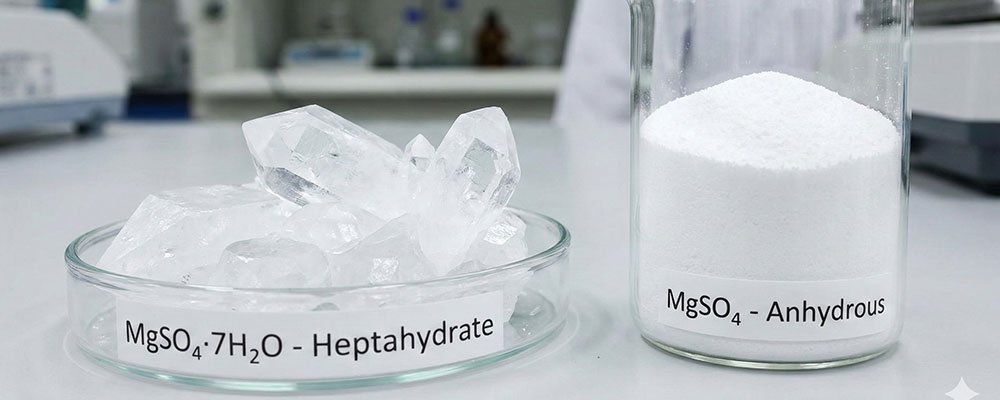
Magnesium sulfate is available in different hydration states, such as:
- Magnesium Sulfate Heptahydrate
- Magnesium Sulfate Monohydrate
- Anhydrous Magnesium Sulfate
These products differ in water content, active magnesium concentration, production process, and handling characteristics.
Heptahydrate
Heptahydrate is one of the most common forms and is often more economical on a per-ton basis because it contains more crystal water and typically involves a more straightforward production process.
Monohydrate and Anhydrous
Monohydrate and anhydrous grades usually contain higher active content per ton and may require additional drying or processing steps. As a result, their price per metric ton is often higher.
However, buyers should not compare only the ton price. For some applications, a higher-priced product may provide better value if it delivers more active magnesium or sulfur per shipment.
4. Order Quantity and Purchase Scale
Order quantity is another important pricing factor. In B2B supply, larger orders often allow suppliers to optimize production planning, packaging usage, and freight efficiency.
Pricing may differ depending on whether the buyer needs:
- samples
- trial orders
- LCL shipments
- one full container
- multiple containers
- regular long-term contract supply
In many cases, full-container orders offer the most competitive per-ton cost. Repeated orders or larger procurement volumes may also create better pricing conditions than one-time small purchases.
5. Packaging Requirements
Packaging affects both product protection and cost. Magnesium sulfate is sensitive to moisture, so packaging must be suitable for storage and export transportation.
Common options include:
- 25 kg PP woven bags with PE inner liner
- 50 kg bags
- 1000 kg jumbo bags
- 1200 kg or 1250 kg jumbo bags
- customized OEM bags with printed branding
Additional costs may arise from:
- custom-printed bags
- stronger packaging materials
- special filling requirements
- palletization
- shrink wrapping and strapping
The more customized the packaging, the higher the packaging cost may be.
6. Palletization and Container Loading Method
Container loading method can change both the unit cost and the delivered quantity.
Non-Palletized Loading
This option often allows higher loading weight per container, which can improve shipping efficiency and reduce freight cost per ton.
Palletized Loading
Palletized loading improves unloading convenience and warehouse handling safety, but it also adds pallet cost and reduces the total product quantity that can fit into one container.
For some buyers, the operational convenience of pallets is worth the additional cost. For others, maximizing shipment weight is more important.
7. Freight and Export Logistics
Freight is a major component of the final delivered cost, especially for international chemical shipments.
Inland Transportation
The location of the factory relative to the export port affects domestic transport cost. Shorter trucking distance to port can help improve FOB competitiveness.
Ocean Freight
If the quotation is based on CIF or CFR terms, the price will also be affected by:
- shipping line rates
- port congestion
- seasonal freight demand
- route availability
- destination country conditions
This is why the same magnesium sulfate product may have very different delivered prices for different countries.
8. Documentation and Inspection Requirements
Some buyers only need basic commercial documents, while others require a more complete quality and compliance package.
Additional support may include:
- COA
- MSDS or SDS
- certificate of origin
- specific origin forms
- third-party inspection
- pre-shipment sampling
- customized document formats
These requirements may not always change the product cost significantly, but they can affect the total quotation depending on the level of support needed.
9. Why the Lowest Price Is Not Always the Best Price
In chemical sourcing, the lowest offer is not always the most economical one. Buyers should compare total value, not only the headline price.
A reliable quotation should be evaluated against:
- grade and purity
- active nutrient content
- packaging standard
- loading quantity
- lead time
- document support
- inspection cooperation
- supplier stability
A slightly higher offer from a dependable manufacturer may reduce risk, improve delivery consistency, and lower total procurement cost over time.
How to Get a More Accurate Magnesium Sulfate Quote
To receive a meaningful quotation, buyers should provide more than just the product name. The more precise your request is, the more accurate the pricing will be.
Please include:
- required grade
- hydration state
- intended application
- packaging type
- estimated quantity
- destination port
- preferred price term, such as FOB, CIF, or CFR
- whether OEM packaging or inspection is needed
This helps suppliers prepare a quotation that is relevant to your actual procurement plan.
Need a Current Magnesium Sulfate Quote?
If you are sourcing magnesium sulfate for agricultural, feed, or industrial use, we can provide a quotation based on your exact grade, packaging, and shipping requirements.
Contact us today with your required specification, quantity, and destination port. Our team can provide a customized FOB or CIF quotation along with product details, packaging options, and supply support information.
FAQ
1. What affects magnesium sulfate price the most?
The main factors usually include raw material costs, product grade, hydration state, order quantity, packaging, freight, and destination market requirements.
2. Why is magnesium sulfate monohydrate often more expensive than heptahydrate?
Monohydrate usually contains higher active content and may require additional processing compared with heptahydrate, which can lead to a higher price per ton.
3. Does packaging affect magnesium sulfate price?
Yes. Standard bags, jumbo bags, custom printing, palletization, and stronger moisture-protective packaging can all influence the final quotation.
4. Why do FOB and CIF prices differ?
FOB includes the product cost and export handling up to the port of shipment, while CIF also includes ocean freight and insurance to the destination port.
5. Does order quantity affect the magnesium sulfate quote?
Yes. Full-container or larger-volume orders are often more cost-effective than small trial orders or LCL shipments.
6. How can I get an accurate magnesium sulfate price quote?
You should provide the required grade, hydration state, packaging type, quantity, destination port, and preferred trade term such as FOB or CIF.
